Lay-Z-Spa Puncture Repair Kit: How to Find and Patch a Leak
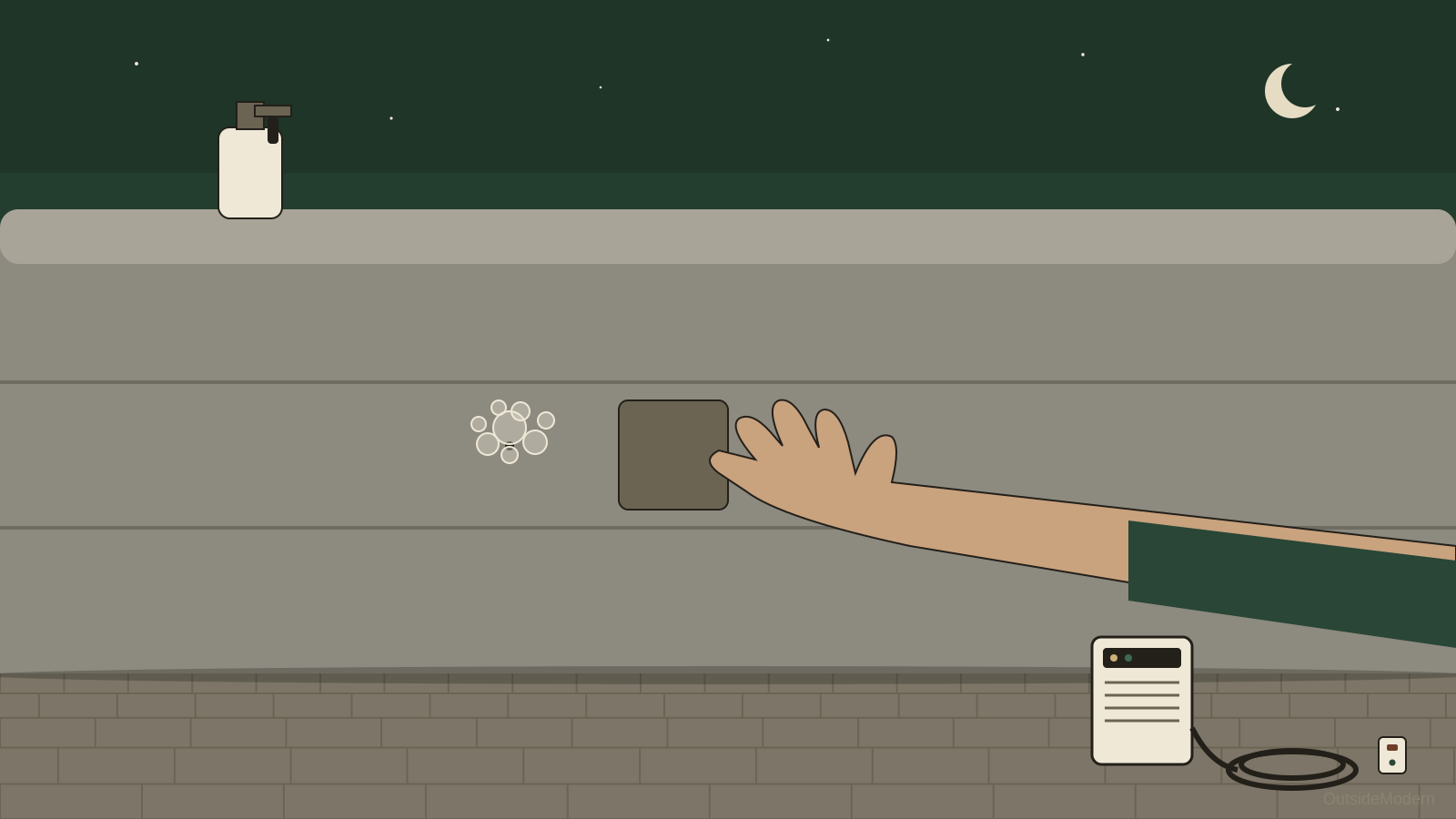
Is your inflatable hot tub going soft, or is the water level dropping overnight? Argh, you have a leak. Fortunately, inflatable hot tubs are fairly easy to patch. Your best bet is to fix the leak as soon as you find it, before a pinhole turns into a tear that’s much harder to repair.
Lay-Z-Spa (often searched as “Lazy Spa”) is Bestway’s brand in the UK and Europe. In the US, the same kind of tubs are sold as SaluSpa and Coleman SaluSpa. Intex PureSpa tubs are built and patched in much the same way, so this guide covers all of them. Both Bestway and Intex put a repair patch in the box with the spa, so check for it before you buy anything.
In September 2024 CPSC announced the recall of about 866,000 Bestway AirJet and HydroJet spa pumps sold with SaluSpa, Coleman and Hydro-Force inflatable spas from May 2021 to May 2024, because they can overheat and catch fire (one death reported). Check the model number on the pump’s label against the CPSC notice, and stop using it if it’s listed.
Below, we’ll show you how to tell an air leak from a water leak, how to find the hole, and how to patch it the way Bestway and Intex say to. Then we’ll cover which repair kit to keep on hand.
Before You Start: Unplug the Spa
- Unplug the pump from the outlet before you hunt for a leak or start a repair. Bestway's manual says the pump must be unplugged before any maintenance, and Intex says to unplug before cleaning, servicing or adjusting the spa.
- Never plug in or unplug the spa with wet hands, or while you're standing in water (Intex).
- Never run the jets or bubbles on an empty tub to feel for escaping air. Use the soapy-water method below; it works with the power off.
- Clear the area of anything sharp that could cause the next puncture.
When you’re done and the patch has set, plug the spa straight into its GFCI-protected outlet, never an extension cord. Our hot tub safety guide covers the electrical rules in full.
Air Leak or Water Leak?
Inflatable spas can leak two ways, and the symptom tells you where to look.
- The walls are going soft. That’s an air leak from the inflated wall chamber. The usual suspects are the air valve and a puncture in the wall.
- The water level is dropping, or there’s a puddle. That’s a water leak. Check the drain valve and its caps, the connectors between the pump and the tub, and then the floor and inner wall for a hole.
Some air loss is normal. Bestway’s manual notes that temperature changes from day to night change the pressure in the spa and can cause some deflation, so you may just need to top up the air. Top it up, then watch for a day before you start hunting.
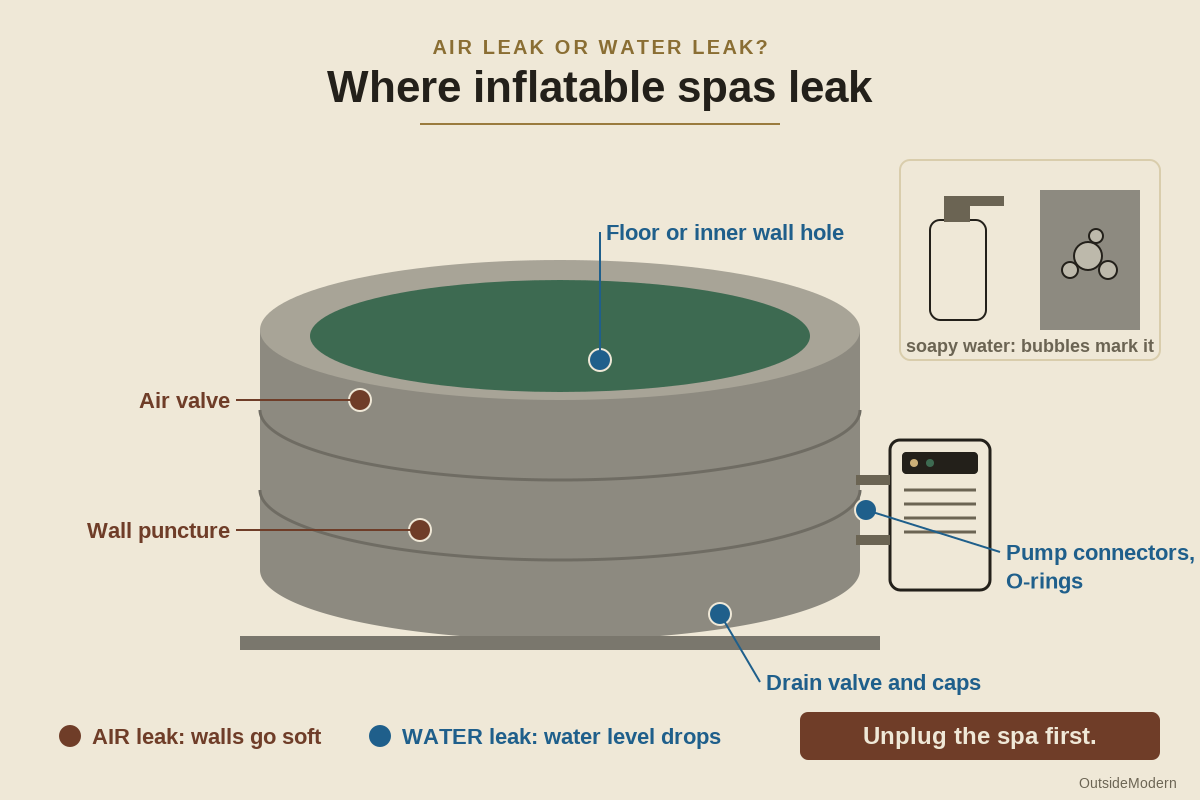
Soft walls point to an air leak; a falling water level points to a water leak. Unplug the spa before you look.
Check the Easy Spots First
Before you go looking for a pinhole, rule out the fittings. Most “leaks” turn out to be one of these:
- The drain valve. Intex says to make sure the drain valve caps are closed on both the inside and the outside.
- The pump-to-tub connections. Bestway blames leaks here on seals that are missing, out of place or damaged, or on adapters that aren’t hand-tight. Intex points to loose inlet and outlet connections, or a missing or dirty O-ring (it suggests a little petroleum jelly on the O-ring).
- The air valve. Spray soapy water over it. If it bubbles, both makers say to tighten it with the supplied wrench, but only with the tub deflated. Intex warns never to adjust the air valve base when the spa is in use or filled with water. With the tub inflated, you can still check that the valve cap is closed.
For heater, pump and error-code problems, see our hot tub troubleshooting guide.
Step 1. Find the Location of the Leak
You’ll need to find the exact spot. Unplug the spa first, and have a washable marker and a coin or piece of tape handy so that you can mark the leak once you find it.
The easiest way to find a puncture is to fill a spray bottle with a diluted soap and water solution. Both Intex and Bestway recommend this. Spray it on the seams and the suspect area, working slowly in sections, and look for spots where the solution bubbles. You may want to use a washable marker to mark the areas you have already sprayed.
If you see any sign of bubbles, spray a little more solution on until you’re sure you’ve found it. You may also be able to hear the tell-tale hiss of a small puncture if you listen very closely.
Once you have found the leak, mark it with a washable marker, or place a piece of tape next to it to remind yourself of the location.
Leaks in the Floor or Below the Waterline
A hole under the water is harder to spot, because the soapy-water trick needs a dry surface. Drain the tub until the suspect area is out of the water, then spray it. Lay-Z-Spa’s UK guide goes further: empty the tub, then spray or rub soapy water over the whole liner and look for bubbles.
Step 2. Clean and Dry the Area
Make sure that there is no debris, tiny glass shards, bits of plastic, etc. still embedded in the lining of the spa. Gently scratch at the area with your fingernail to get at anything stuck in the hole, and be careful not to cut yourself on glass or other sharp objects.
Both makers say to clean the area first, and to dry it thoroughly for any patch that isn’t made to go on wet. If you sprayed soapy water to find the leak, rinse it off and dry the area completely, since soap residue can stop the patch from sticking.
Step 3. Apply the Patch
Which method you use depends on the tub’s material. Bestway’s blog, written about its Tritech-walled tubs, splits it by location: a self-adhesive patch for the inside floor and the cover, and patch plus glue for the sidewalls and the outside of the floor. Check your owner’s manual if you’re not sure which liner you have.
Self-Adhesive Patch (Most Bestway and Intex Tubs)
For a standard PVC Bestway spa, the manual says to use the underwater adhesive repair patch that came with it. Intex’s PureSpa manual gives nearly the same steps for its enclosed patch:
- Clean the area to be repaired (Intex adds: and dry it thoroughly).
- Carefully peel the backing off the patch.
- Press the patch firmly over the hole.
- Smooth out any air bubbles (Intex).
- Bestway says to wait 30 seconds before inflating. Intex gives no wait time, so follow the patch pack.
Keep the patch as taut as you can while you bring it to the hole. Try to work from the center of the patch outwards, pushing out any water or air, and your patch will be nice and smooth.
Intex’s manual uses the same patch steps for the air bladder in its spa cover.
Patch and Glue (Bestway Tritech Sidewalls)
Bestway’s Tritech tubs need a PVC repair patch and glue, and the manual notes that the glue is not included. Its steps:
- Clean and dry the area.
- Cut the patch to size.
- Coat one side of the patch evenly with glue.
- Wait 30 seconds, then place the patch over the hole.
- Smooth out any air bubbles and press firmly for two minutes.
- Wait 30 minutes before inflating.
Bestway doesn’t name a particular glue, only “PVC glue”. A vinyl repair kit with its own cement, like the ones below, is our suggestion, not Bestway’s. Follow the glue’s label for ventilation and drying time.
Step 4. Let It Cure Before You Refill
Give the patch time to set before you put air or water back in:
- Bestway self-adhesive patch: 30 seconds before inflating.
- Bestway patch and glue (Tritech): 30 minutes before inflating.
- Lay-Z-Spa (UK): at least 30 minutes, per its repair guide.
- Intex: the manual gives no cure time, so follow the patch pack.
Those are the makers’ minimums. We’d wait longer if you can, ideally overnight, before you refill and heat the tub. Then keep an eye on the patch and the water level for the next few days.
Which Repair Kit to Use
Start with the patch that came in the box. If it’s gone, or you want spares on hand, here’s what we’d buy.
Our Pick: Bestway Underwater Adhesive Repair Patch (62091E)
This is Bestway’s own peel-and-stick patch, the kind its US manual tells you to use on standard PVC tubs. The pack holds ten patches, each 2.5 inches square, so you can fix several small leaks or a pinhole that comes back. It’s made to stick underwater, so you may not need to drain the tub for a leak below the waterline.
It’s not a glue kit, though. If you have a Bestway Tritech tub with a sidewall puncture, Bestway says to use a PVC patch and glue instead. And a 2.5-inch square won’t cover a long tear.

Bestway Underwater Adhesive Repair Patch 10-Pack 62091E
Quick and easy to use with adhesive that sticks underwater
What we like
- Bestway's own underwater adhesive patch
- Peel and stick, no glue to mix or dry
- Made to apply underwater
- Ten patches per pack
Worth noting
- Each patch is only 2.5 inches square
- Not Bestway's method for Tritech sidewalls, which need patch and glue
- Won't fix a split seam
For the Glue-and-Patch Method: A Vinyl Repair Kit with Cement
For Bestway’s Tritech patch-and-glue steps, or a dry repair above the waterline on any vinyl tub, look for a vinyl repair kit that includes its own vinyl cement, so you can cut the patch to size. Bestway only says “PVC glue”, so the kit you pick is our suggestion, not Bestway’s. We haven’t boxed one because we couldn’t confirm a current listing we can link.
For Intex Owners: Intex Repair Swatches
If your PureSpa’s enclosed patch is used up, Intex’s replacement-parts store lists repair swatches by spa model. Match the swatch to your tub’s model number.
Also Consider: Bestway Heavy-Duty Repair Patch (62068)
This is another Bestway self-adhesive ten-pack of 2.5-inch squares. Despite what we said here before, it’s not a glue kit. It does the same job as the 62091E, and the listing we used to link appears to be a UK/EU pack, so we’ve dropped its box.
UK Readers: Lay-Z-Spa Vinyl Repair Kit
In the UK, Lay-Z-Spa sells its own vinyl repair kit, which uses glue. Its repair guide says to follow the kit’s glue instructions, hold the patch firmly for at least two minutes, and wait at least 30 minutes before inflating. It isn’t sold in the US.
When Not to Patch
A patch is made for punctures and small tears in the liner. Contact the maker instead of patching if:
- A seam has split. Neither maker’s patch steps cover seams, and a patch over a seam that’s pulling apart is unlikely to last.
- The patch doesn’t hold, or the leak is somewhere a patch can’t reach. Intex’s troubleshooting table, for example, says to patch a leaking air-bubble channel and contact its Service Center if the problem persists.
- The tear is too big for a patch. Ask the maker about a replacement liner.
Bestway handles warranty claims through its registration and warranty page on Bestway’s US site, and Intex through its Service Center.
What about the warranty? Intex’s warranty excludes “unauthorized alterations, repairs or disassembly”, and Bestway’s excludes alteration by the owner or a third party. A repair with the supplied patch, done the way the manual describes, is the makers’ own instruction. If your tub is still under warranty and the damage is anything more than a pinhole, contact the maker before you glue anything.
Preventing Punctures
- Start with the base. Lay a ground cloth or floor protector on a level surface cleared of sharp objects, as Intex’s manual says. Grass and dirt aren’t a base; see our surround ideas for better options.
- Give it room. Bestway suggests keeping the tub away from bushes, walls and fences.
- Watch what goes in. No jewelry or glass in the tub (Bestway).
- Don’t drag it. Never drag the tub, and don’t try to move it while it’s full (Bestway).
A good cover helps too: see our hot tub cover guide.
Frequently Asked Questions
Can you patch a Lay-Z-Spa or SaluSpa while it’s full of water?
Yes, for small holes. Bestway’s underwater adhesive patch is made to go on wet, so you can apply it below the waterline. Unplug the spa first. For the patch-and-glue method on Tritech tubs, the area must be clean and dry, so drain the tub below the hole.
How long should a hot tub patch cure before I refill or inflate?
Bestway says 30 seconds for its self-adhesive patch and 30 minutes for patch and glue. Lay-Z-Spa’s UK guide says at least 30 minutes. Intex gives no time, so follow the patch pack. We’d wait longer if you can.
What glue should I use on an inflatable hot tub?
Bestway’s manual says PVC glue for its Tritech tubs and doesn’t name a brand. A vinyl repair kit that comes with its own vinyl cement does the same job. Follow the glue’s label, and work somewhere well ventilated.
Why does my inflatable hot tub keep going soft?
Some pressure loss is normal as the temperature changes, so top up the air first. If it keeps going soft, check the air valve with soapy water and tighten it with the supplied wrench while the tub is deflated. If the valve is fine, spray the seams and walls to find a puncture.
Can you repair a leaking seam on an inflatable hot tub?
Not reliably with a patch. Contact Bestway or Intex, especially if the tub is under warranty. A split seam usually means a replacement liner.
Will patching my inflatable hot tub void the warranty?
Using the patch supplied with the spa, as the manual describes, is the makers’ own instruction. Both makers’ warranties exclude unauthorized repairs or alterations, though, so check with the maker before you attempt anything bigger.
Conclusion: Lazy Spa Puncture Repair Kit
Dealing with inflatable hot tub leaks can be frustrating, but they’re usually not that difficult to fix. Unplug the spa, find the leak with soapy water, clean and dry it, patch it, and give it time to set. It’s wise to keep a spare pack of patches on hand, and try to keep sharp objects away from the tub!
If the damage is too extensive to repair, it may be time for a new tub. Take a look at our inflatable hot tub reviews and our picks for cheap hot tubs. For keeping the water itself in shape, see our Lay-Z-Spa water treatment guide or, for Intex owners, our Intex PureSpa chemicals guide.
Previously recommended
- Bestway Glue and Patch Inflatable Repair Kit: the listing we linked is gone. For the glue-and-patch method, we now suggest a vinyl repair kit that includes its own cement.