Best Orbital Lounger: Round Zero Gravity Rocking Chaise
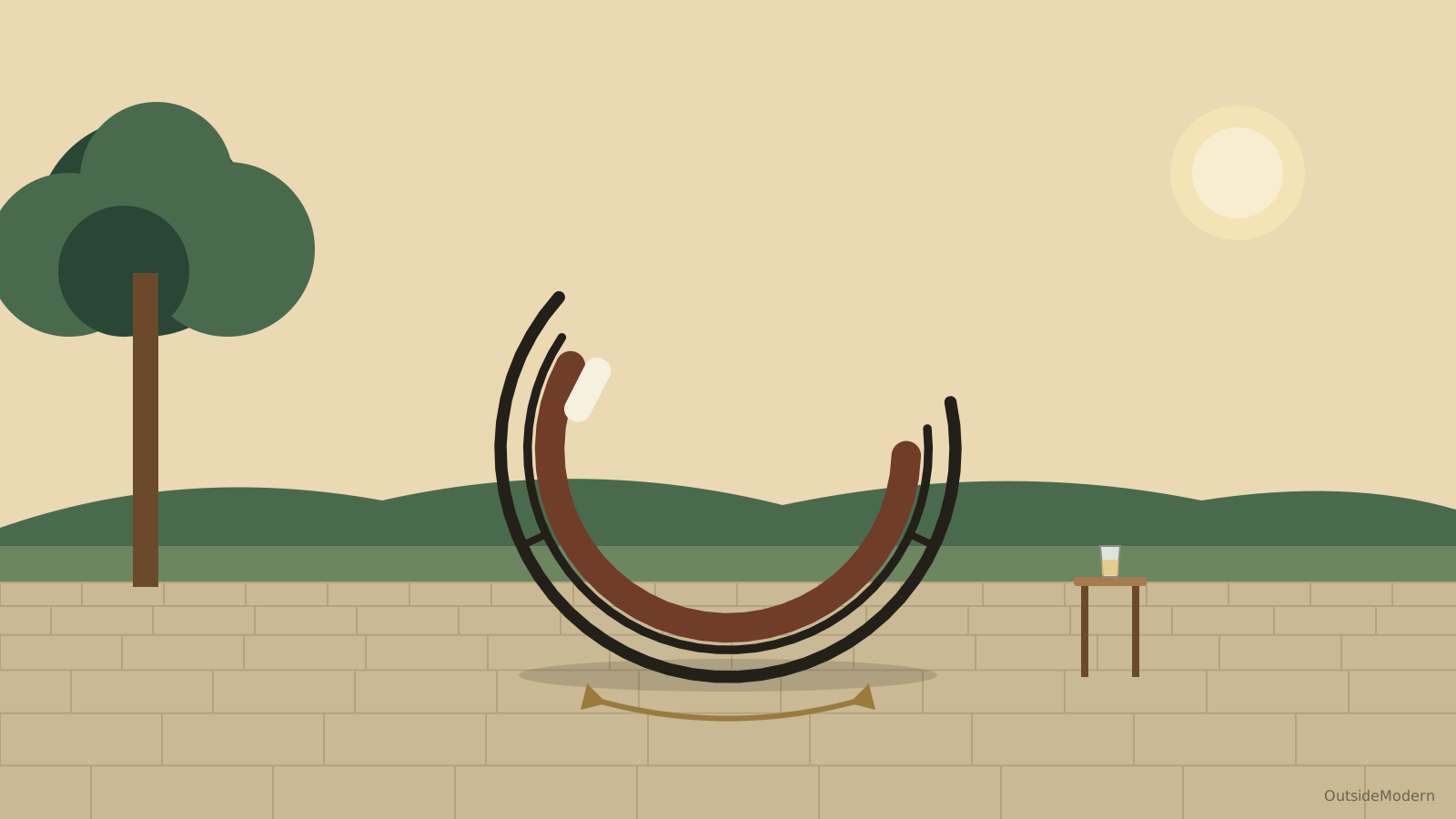
The orbital chaise lounger is one of the more fun ideas in outdoor furniture. It’s a chaise lounge and a rocking chair in one: a sling seat hung in a round steel frame that rocks you back and forth, then folds up when you’re done. You’ll also see it sold as an orbital zero gravity lounger, an orbit lounge chair or a moon lounger.
It’s also a shrinking niche. Most of the orbital loungers we recommended when we first wrote this guide are no longer listed by their makers. So this page is now mostly a buyer’s guide: what an orbital lounger is, how it rocks and folds, what to check before you buy, and how to care for one. The one model we found still in production is the Vivere Orbital Lounger, covered below.
What’s changed in this update: we removed the discontinued picks, rebuilt the specs for the Vivere from the maker’s own store page and manual, and added a buying guide, safety notes from the maker and an FAQ. If you want a regular patio chaise instead, start with our guide to the best outdoor chaise lounges.
What Is an Orbital Lounger?
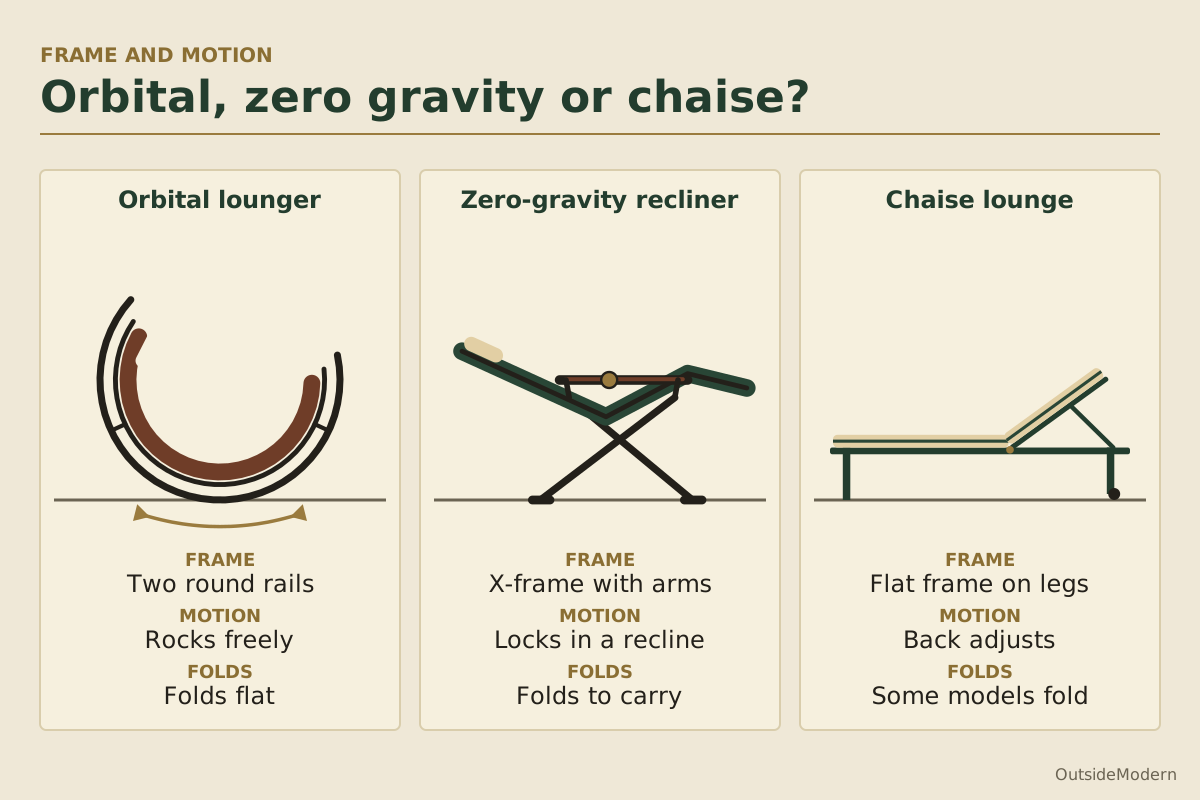
An orbital lounger is a folding outdoor lounge chair built on two round (or nearly round) steel frames, one inside the other, with a fabric sling stretched across the inner frame. The outer ring sits on the ground and acts as the rocker. Shift your weight back and the whole chair rolls into a reclined, feet-up position; lean forward and it rolls you back toward sitting. Many fold flat for storage.
That’s the big difference from a zero gravity recliner. A zero gravity chair also puts your feet up, but it sits on an X-shaped or tube frame and locks at the angle you choose. An orbital lounger usually has no recline lock: it rocks freely, and where it settles depends on how you sit in it. A standard chaise lounge, by contrast, sits flat on its legs and usually has an adjustable backrest.
If you like the feet-up position but want it to stay put, look at our KingCamp zero gravity chair review and our reclining lawn chair guide. If it’s the rocking you’re after, a runner-style rocker may suit you better; see our folding outdoor rocker chairs.
Orbital Lounger: What To Look For
An orbital lounger is a simple machine, but the details decide whether it’s a joy or a nuisance. Here’s what we’d check.
Weight Capacity
Look for a weight capacity from the maker itself, in the manual or on the maker’s own product page, and check the label on the chair you receive. Retailer listings for the same chair don’t always agree with the maker. On the Vivere below, for example, the maker’s manual and the listings we found give different figures, and we go with the manual.
If you’re close to a maker’s limit, leave yourself some margin rather than sitting right at it.
Size and Your Height
Orbital loungers are a fixed length, and the rings set how far back you go. Compare the overall length with your height, and check where the head cushion will sit. If you’re tall, make sure the cushion will land behind your head rather than your shoulders.
Width matters too. The sling sits inside the inner ring, so the usable seat may be narrower than the overall width on the spec sheet.
Folded Size and Carry Weight
Part of the appeal of an orbital lounger is that it folds for storage. If the maker publishes a folded size or product weight, check it against the space you have in the garage or shed and how far you’ll carry it. If not (Vivere doesn’t publish either for its lounger), measure your storage spot generously and ask the seller for the folded size before you buy.
Getting In and Out
This can be the awkward part. The seat can sit low (14 inches on the Vivere, per the maker), and a rocking chair moves when you do, so take it slowly. Sit down on the front edge before you lean back, and rock forward until your feet are flat before you stand up.
People with back or hip problems, or anyone a bit less steady on their feet, may find it harder than a regular chaise. If that’s you, ask your doctor or physical therapist which kind of seating works for you before you buy.
Fabric and Frame Finish
Sling fabrics vary by maker (Vivere uses a Phifertex sling over a powder-coated steel frame). Use the maker’s own fabric name and claims as your guide, and see our guide to outdoor fabrics for how the common types differ.
Powder coat protects steel, but only while it’s intact. Vivere’s manual says the steel will rust where the paint is scratched and should be touched up right away, so it’s worth keeping some touch-up paint on hand. Follow the maker’s care and storage directions for the sling, too.
Rocking, Folding and Pinch Points
Read the maker’s warnings before the first rock. Use the chair on a flat, level surface, don’t stand on it, and don’t exceed the weight rating. Follow the maker’s instructions for folding the frame, and keep fingers clear of the hinges when you open or close it. Keep small parts away from children during assembly, as Vivere’s manual says.
Be wary of any listing that calls a chair “tip-proof” or “pinch-free.” A chair that rocks and folds can tip and can pinch, so use it the way the maker’s manual says.
The Orbital Lounger Still in Production
1. Vivere Orbital Lounger, Sienna (ORBL1-SA)
The Vivere Orbital Lounger is the one orbital lounger from our original guide that’s still in production. Vivere’s own store lists the Sienna colorway (ORBL1-SA) as available, along with a 2024 manual for the ORBL1. That store is Vivere’s European shop, though, and we couldn’t find a US maker page or a major US retailer selling it directly, so check stock before you plan around it.
Vivere describes the ORBL1 as a powder-coated steel lounger with a Phifertex sling and a head cushion. The company says it’s “designed for ergonomic comfort” and lets you unwind in a zero-gravity position, and that the sling seat offers support and weather resistance. Those are Vivere’s claims; we make no health claims for it.
Weight capacity. Vivere’s ORBL1 manual says the lounger “is intended for a maximum of 150 kg” (330 lb on Vivere’s store page). Some retailer listings, and our own 2017 review, printed a lower figure. We go with the manual, but check the label on your unit.
Vivere’s warnings. The manual says: “Do not exceed weight capacity. Do not stand on the product.” It also says to “only use and assemble on a clean, level surface” and to “ensure the legs of the frame remain in contact with the surface at all times.” On assembly: “Do not tighten bolts until fully assembled. Do not over tighten bolts. Inspect and tighten all bolts regularly,” and don’t use the lounger if parts are missing, damaged or worn. It also says to keep small parts out of reach of children. The manual doesn’t publish a folding or pinch-point warning, so keep your fingers clear of the hinges when you fold it.
Care. Vivere says to store the lounger in a cool, dry place during inclement weather and the winter months, never to use a pressure hose on it, and to touch up scratches in the powder coat right away because the steel underneath will rust. It also recommends a furniture cover.
When we first reviewed the Vivere, we found it fiddlier to assemble than the others on our list, and not as easy to fold and put away. Plan on an extra pair of hands for a few of the assembly steps.

Vivere Outdoor Rocking Chair, Sienna
Ergonomically designed to drastically increase your R&R time
What we like
- Vivere rates it to 150 kg (330 lb) in its manual
- Phifertex sling (Vivere)
- Head cushion included
- Powder-coated steel frame folds for storage
Worth noting
- Fiddly assembly and folding
- Vivere says store it indoors in bad weather and winter
- Steel rusts where the paint is scratched (Vivere)
- No published folded size or weight
Other Orbital Loungers
Outsunny (Aosom) lists orbital rocking loungers on its own site, but we couldn’t read the maker’s product pages to confirm a weight rating, specs or warnings, so we don’t recommend a specific model. The Outsunny “Zero Gravity Rocking Chair” sold at Target is a different design that rocks on curved runners, not rings; that style belongs with the folding rocker chairs mentioned above.
Frequently Asked Questions
What is an orbital lounger?
An orbital lounger is a folding outdoor lounge chair with a fabric sling hung in two round steel frames. The outer ring rocks on the ground, so you can rock between sitting up and lying back with your feet raised. Most fold flat for storage.
Is an orbital lounger the same as a zero gravity chair?
Not quite. Both put your feet up, and makers often sell orbital loungers as “zero gravity” chairs. But a typical zero gravity recliner locks at the angle you choose, while an orbital lounger rocks freely with no recline lock.
How much weight can an orbital lounger hold?
It depends on the model, so use the figure the maker publishes, and check the label on the chair. Vivere’s manual gives a maximum of 150 kg (330 lb) for its ORBL1 Orbital Lounger. Retailer listings don’t always match the maker’s figure.
Are orbital loungers hard to get in and out of?
They can be. The seat is low (14 inches on the Vivere, per the maker) and the chair moves with you, so take it slowly getting up. If you have back or hip problems, a regular chaise lounge or a recliner may be easier; ask your doctor or physical therapist if you’re unsure.
Can you leave an orbital lounger outside?
For a while, but not year-round. Vivere says to store its lounger in a cool, dry place in bad weather and over the winter, and to touch up any scratches in the frame’s paint so the steel doesn’t rust.
Previously recommended
- Sundale Outdoor Orbital Chaise Lounge: no longer listed by Sundale Outdoor.
- Sunnydaze Orbital Folding Zero Gravity Rocking Lounger: Sunnydaze no longer lists an orbital lounger.
- RST Brands Original Orbital Zero Gravity Patio Lounger (OP-OL04): no longer listed on RST Brands’ site.
- UrbanFurnishing Zero Gravity Orbital Patio Lounger: no longer listed by UrbanFurnishing.
For the one orbital model we found still in production, see the Vivere section above, and check whether it’s in stock where you live before you plan around it.
Final Thoughts
An orbital lounger is a great way to rock away a summer afternoon, but the choice has narrowed to very few models since we first wrote this guide. If you find one, check the maker’s weight rating and warnings, measure where you’ll store it, and keep it out of the weather when you’re not using it.
If an orbital lounger isn’t quite right, our chaise lounge guide linked above covers the other types of lounger, and our recliner and reclining lawn chair guides cover feet-up chairs that lock in place. Heading for the sand or the pool? Try our beach lounge chairs and pool loungers. And for more patio seating, see our Adirondack chairs and hammock and hanging chairs.