Best Roof Rake for Snow Removal: Picks, Safety & Ice Dams
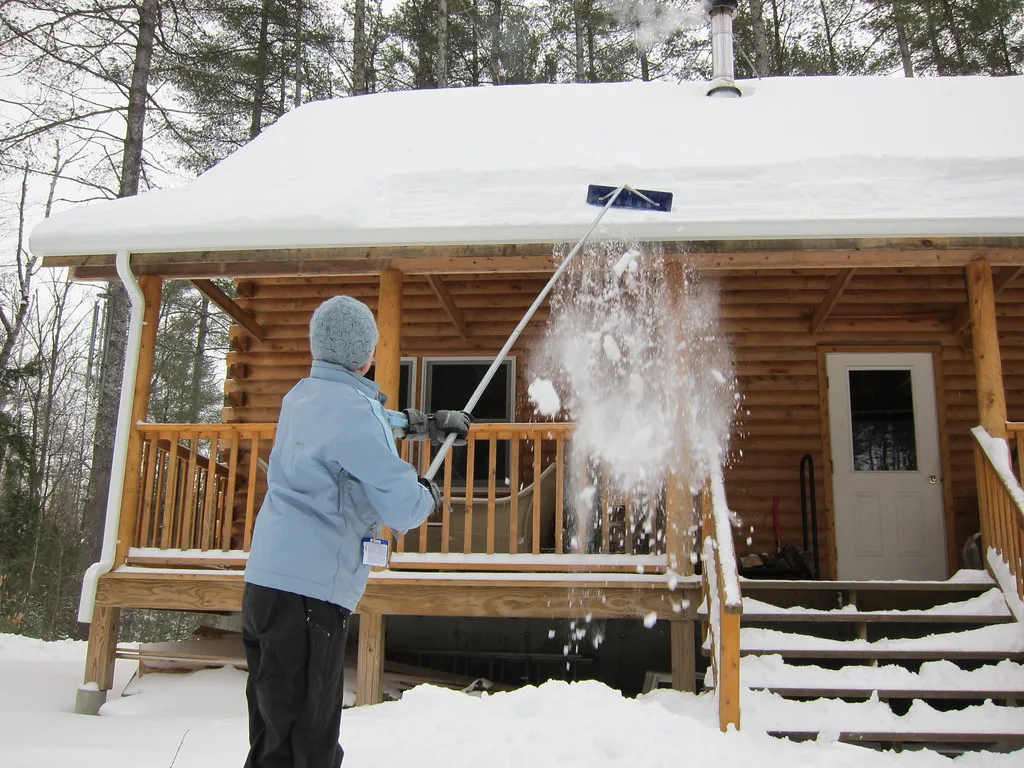
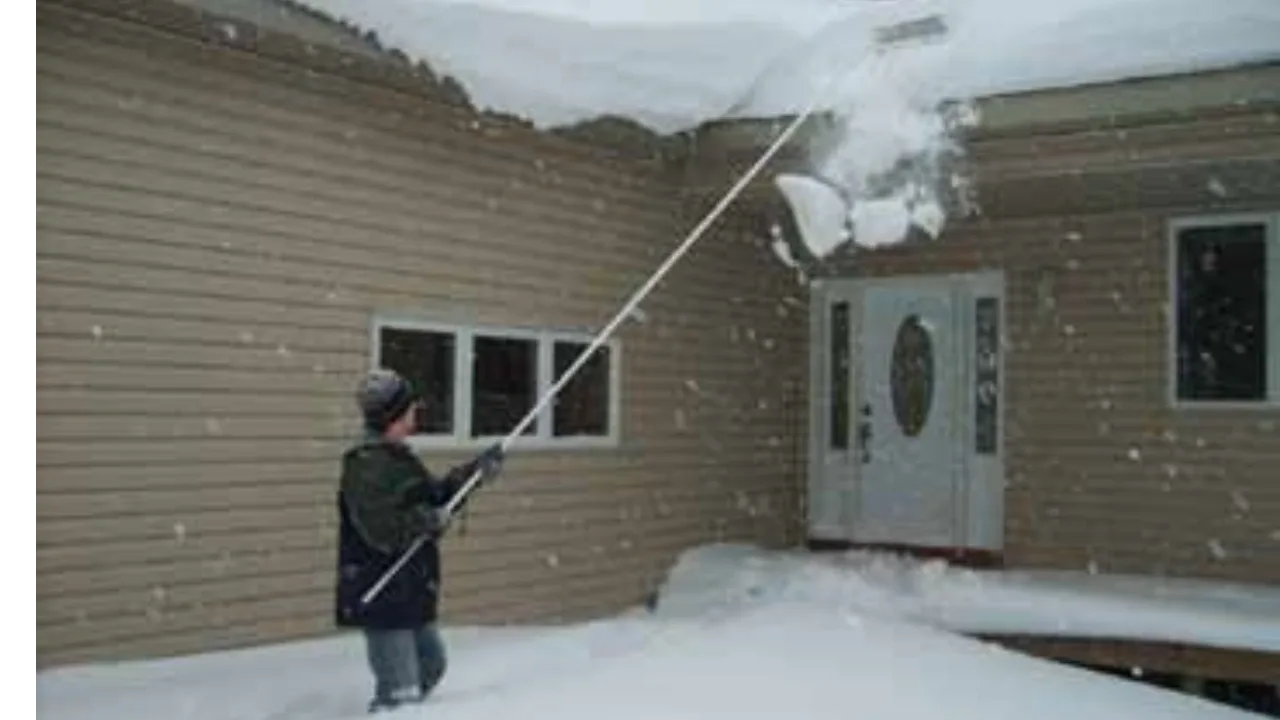
Hero photo: “roof raking” by ChrisDag, CC BY 2.0, via Flickr.
A roof rake is a specialized rake designed to push and pull snow off of a roof. They look similar to the rakes used to gather up leaves but have a blunt rectangle at the end of the pole instead of the traditional spikes. Many can also be used to remove wet leaves, giving them multiple uses.
Why bother? Snow is heavy, and the snow sitting just above your gutters is what feeds ice dams. Clearing the lower edge of the roof from the ground takes away one of the ingredients an ice dam needs, and it lightens the load on the roof after a big storm.
Based on manufacturer specs, owner reviews and current expert roundups, the best roof rake for most homes is the Avalanche! SRD20 SnowRake Deluxe 20. Its 24-inch head rides on built-in wheels that keep the blade off your shingles, the maker lists it for everything from asphalt shingles to metal and solar-panel roofs, and it weighs only about 5.8 lb.
It also breaks down into five snap-together sections and comes with a wall-mount bracket, which makes it convenient for people with little space in their garages and tool sheds.
What’s changed in this update: we’ve added two slide-style systems and a 30 ft long-reach pick, corrected the extension advice for the SRD20, dropped a rake that’s no longer sold, and added a full section on raking safely near power lines. Our picks are based on specs, owner reviews and expert coverage, not our own hands-on testing.
| Product | Type | Reach | Head | Wheels | Pole | Extendable | |
|---|---|---|---|---|---|---|---|
| Avalanche! Snow Roof Rake Deluxe, Easy Snow Removal from Roof, Prevents Ice Dams… Best overall | Pull rake | About 20 ft | 24 in plastic | Yes, 1.5 in | Aluminum, 5 snap sections | No kit; single replacement sections only | Price |
| Snow Joe Telescoping Roof Rake, Extendable Leaf & Snow Shovel with Poly Blade… Runner up: best telescoping | Pull rake | 6.2 to 21 ft pole | 25 x 6 in poly | No | Aluminum, telescoping | Telescoping only | Price |
| SNOWPEELER Premium 30 ft Roof Rake (Model 3003) Best long reach | Slide system | 30 ft | 18 in aluminum cutter, 10 ft slide | No (glide pads) | Aluminum, six 5 ft sections | Use as many sections as you need | Price |
| MARSHALLTOWN Avalanche! 500 (AVA500) Roof Snow Removal System Best slide system, fiberglass pole | Slide system | About 16 ft | 17 in cutter, 12 ft slide | Yes, 1.5 in | Fiberglass, 4 sections | Yes, AVA-HK kit adds up to 8 ft | Price |
| Garelick 89421 21-Foot Aluminum Snow Roof Rake With 24-Inch Blade Best aluminum blade | Pull rake | 21 ft | 24 in aluminum | Shingle Saver rollers | Aluminum, sectional | Yes, 5 ft section (89005) | Price |
| Garant GPRR24 Yukon 24-Inch Poly Blade Snow Roof Rake Best for single-story roofs | Pull rake | 15 ft handle | 24 in poly | No | Aluminum, three 5 ft sections | Yes, 5 ft section (GPRR24E) | Price |
Best Roof Rake for Snow Removal
The Avalanche! SRD20 is a wheeled pull rake: a 24-inch plastic head on 1.5-inch wheels, mounted on five 46.5-inch aluminum sections for about 20 ft of reach. Family Handyman named it the best plastic-blade snow rake, and owners consistently praise how light it is and how much snow the wide head moves.
The catch is the pole. It flexes at full length, it’s aluminum (so keep it well away from power lines), and there’s no extension kit made for it. For a complete review of the SRD20, please see below.
Best Telescoping Roof Rake
Our runner-up rake is the Snow Joe RJ204M. It pairs a wide poly blade with a one-piece aluminum telescoping pole instead of one which needs to be assembled, which makes it lightweight and easy to use. The main reason it didn’t come in first is that it doesn’t have wheels on the rake head, so it’s more likely that someone will accidentally scratch their roof.
Roof Rake Buyer’s Tips – What To Look For
There are a few considerations to be aware of when shopping for a roof rake. We’ll look at the major points here.
Shaft Length
You want to be sure that the shaft you’re purchasing is long enough to enable you to reach the snow you wish to remove. You also need to be able to see what you’re doing, which means you’ll have to stand several feet back from the edge of the wall. You also need to keep in mind grade changes around your house (e.g. does your land slope down as you walk away from your house, or is it flat?)
It’s hard to give exact estimates for roof rake shaft lengths, but generally, a 20 to 21 ft pole will clear the lower part of most single-story roofs and the bottom edge of many two-story roofs. As an example, a 21 ft pole held from 10 ft back reaches only about 11 ft up a typical one-story roof (see the diagram below). Taller eaves call for a 25 to 30 ft system, or a pro.
Also plan to stop a few feet short of full extension. Every pole flexes when it’s fully extended, and a whippy pole is hard to control.
Telescoping vs. Shaft Pieces
Telescoping shafts are generally easier to manage. You extend one section as far as it can go, then extend the next section if needed. Everything is compact and organized, and pretty easy to manage.
Shaft pieces, on the other hand, can let you add extensions (if the maker sells one for your model), but the process of adding an extension is a bit more difficult than telescoping handles. Check compatibility before you buy an extension. Some are made for one model family only.
Wheels and Rollers
Wheels and rollers are a big help when present on a roof rake. These little wheels hold the blade edge just off the surface, which helps ensure that the rake does not scratch or otherwise damage your roof shingles.
Even with wheels, don’t aim for a bare roof. The Maine Emergency Management Agency suggests shaving the snow down to 2 or 3 inches rather than scraping the roof clean, which risks damaging shingles or other roof coverings.
Blade Width
The wider the blade, the quicker you’ll remove snow. However, if you have tight spots to squeeze into, or narrow valleys to deal with, a wider blade may be a hindrance, making work more difficult.
Also, wider blades may blow around in the wind more than compact blades.
Rake Weight
Most rakes only weigh a few pounds, but when fully extended, can be quite challenging to handle. All the weight is at the very end of the pole, and the wind has a tendency to blow the shaft around a bit when extended. Lighter weight poles are generally easier to work with.
Pull Rake or Slide System?
A pull rake is the classic design. You reach up, set the blade on the snow and drag it down off the eave. It’s simple and precise, and it’s great for clearing the strip above the gutters.
A slide system works the other way around. You push a cutting frame up the roof, and the snow it cuts rides a long plastic or fabric sheet down to the ground. You aren’t hauling every load, which saves a lot of effort in deep, fresh snow. The trade-offs: slide systems struggle with crusty or icy snow, the sheet can catch the wind, and the snow comes down fast right near where you’re standing.
Pole Material: Aluminum vs. Fiberglass
Most roof rakes use aluminum poles. Aluminum is light and stiff, but it conducts electricity. Fiberglass, like the handle on the Avalanche! 500, conducts far less, but it is not safe near power lines either. Wet or dirty fiberglass can conduct, the sections are often joined with metal couplers, and OSHA treats any object without an insulating rating as conductive. Whatever your pole is made of, keep it well away from power lines (more on that below).
Head Design and Roof Type
Poly and plastic heads are gentler on roofing, while aluminum blades are stiffer and cut through crusted or wind-packed snow better. Wheels or rollers matter most on delicate surfaces.
Roof type narrows the field. Avalanche! lists the SRD20 for shingle, architectural asphalt, shake, tile, metal and solar-panel roofs, but rates the slide-style AVA500 for asphalt shingles only (its AVA750 sibling is the version for tile, shake, metal and solar). Reviewers at Sensible Digs recommend Garelick-style aluminum rakes with rollers for metal and standing-seam roofs. If you have a specialty roof, check the maker’s roof list before you buy.
How to Use a Roof Rake Safely
A roof rake is the safe alternative to climbing on the roof, but only if you use it from the ground and keep an eye on what’s overhead.
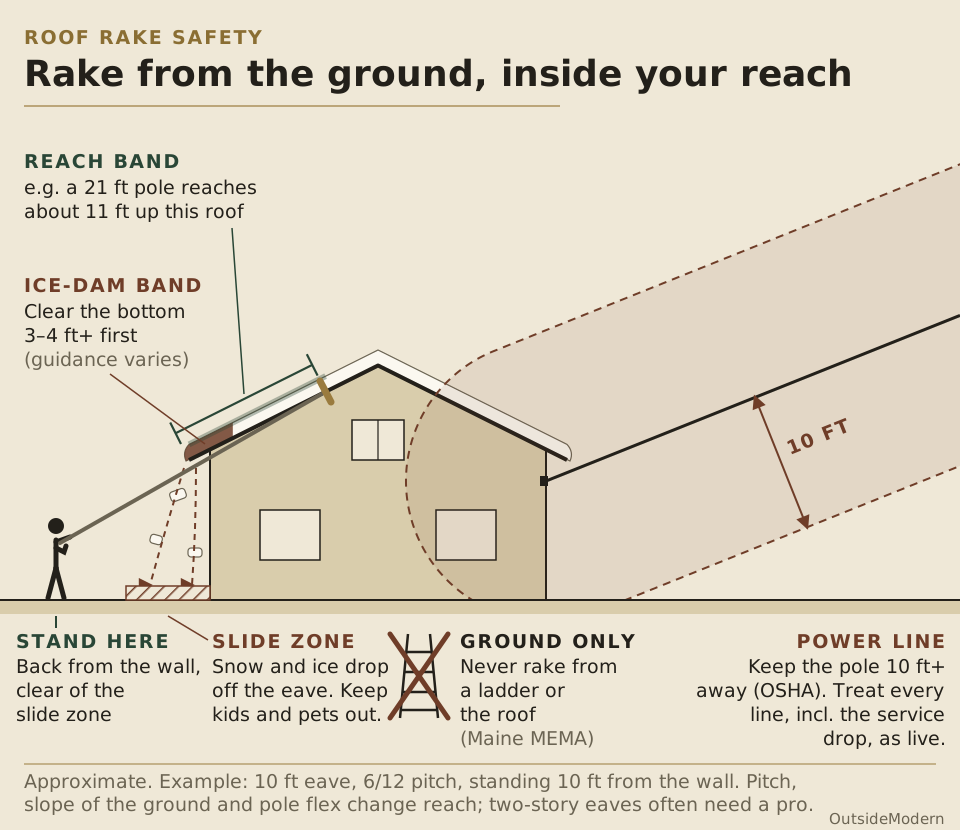
Look Up First: Power Lines
Before you extend the pole, find every overhead line near the part of the roof you plan to clear, including the service drop where power enters your house. Treat every line as live.
OSHA requires workers to keep themselves and any conductive object they’re holding at least 10 ft from overhead lines carrying up to 50 kV, and that includes someone standing on the ground with a long pole. That rule is written for workers, not homeowners, but treat it as your minimum. The Maine Emergency Management Agency puts it plainly: an aluminum rake will conduct electricity, so check where the lines enter your house and stay well away from that area.
If you can’t reach the snow without some part of the pole coming within 10 ft of a line, leave that section alone and call your utility or a professional.
Stay on the Ground
Never rake from a ladder, and never climb onto the roof to finish the job. Maine’s emergency management agency says no to ladders in winter because ice and snow build up on the rungs and on the soles of your boots, and it warns that anything requiring you to get onto the roof may be too dangerous for anyone but a trained professional with safety gear. OSHA’s winter guidance also tells employers to use snow removal methods that keep workers off roofs where possible, and notes that snow can hide skylights.
Mind the Slide Zone
Any snow that comes down can come down on you. Stand well back, rake small amounts at a time, and keep kids and pets out of the area under the eave (set the kids up with their snow toys somewhere else in the yard). Maine’s guidance also suggests protective headgear and goggles, care with large icicles over doorways, and having a second person outside with you. A cubic foot of ice weighs about 62 lb, so falling chunks are no joke.
When you’re done, clear the snow you’ve dropped away from walkways, vents, meters and AC units. An electric snow shovel or a two-stage snow blower makes quick work of the pile.
Rake Technique
- Check for power lines and decide where the snow will land before you start.
- Start at the edge of the roof and work your way up in overlapping strips, pulling the snow down-slope toward the eave.
- If ice dams are the worry, clear the bottom few feet of roof first. Advice varies, but 3 to 4 ft above the eave is a common minimum and some sources suggest more.
- Leave 2 to 3 inches of snow on the roof rather than scraping down to the shingles.
- Take small bites, especially with wet snow, and don’t work at full extension.
- Clear the landing zone, walkways and any buried vents afterward, and treat any slick spots with a pet-safe ice melt if dogs use the path.
Heavy, wet snow is hard work overhead, so take breaks and dress for the cold. Meltwater dripping off the eave often refreezes on the steps below, and heated stair treads keep an entry clear without salt.
When to Call a Pro
Call a professional if the snow you need to clear is out of reach from the ground, if power lines run near the eave, or if a large ice dam is already leaking inside. Maine’s emergency management agency also lists warning signs of an overloaded roof: sagging sections, severe leaks, cracked or split wood members, doors that pop open or windows that are hard to open, and creaking, cracking or popping sounds. If you notice any of these, it advises leaving the building right away and getting it inspected.
Roof Rakes and Ice Dams
An ice dam is a ridge of ice that forms at the edge of a roof. Heat escaping from the house melts snow higher on the roof, and the water runs down to the colder eave, where it refreezes. Water then backs up behind that ridge and can leak into the attic and walls.
Raking the lower roof helps because, as the University of Minnesota Extension puts it, removing the snow eliminates one of the ingredients an ice dam needs. It treats the symptom, though. The lasting fix is to stop the heat loss with air sealing, insulation and ventilation.
Don’t chop at an existing ice dam with your roof rake. Rakes are made for snow, not ice, and hacking at it is a good way to damage the roof and the rake. For big, active dams, UMN Extension recommends calling in professionals.
Snow Rake Reviews
In this section, we’ll look at six of the top roof rakes available, from wheeled pull rakes to slide systems. We’ll compare and contrast, and conclude with our favorites.
1. Avalanche! SRD20 SnowRake Deluxe 20
- 24 in. plastic head on built-in wheels
- Aluminum pole in five snap-together sections
- Maker-listed for shingle, shake, tile, metal and solar roofs
- Wall-mount storage bracket included
The Avalanche! SRD20, now sold under the MARSHALLTOWN name, has a few features that make it a really strong roof rake. The pole comes in five 46.5-inch aluminum sections that snap together without tools, for about 20 ft of reach.
One correction from our earlier coverage: the SRD20 does not take the Avalanche! AVA-HK extension kit, which is made for the company’s 500, 750 and 1000 slide systems. MARSHALLTOWN sells single replacement aluminum sections (SR-HE) for the SRD20, which some retailers list as extension poles, but it doesn’t advertise a reach beyond about 20 ft.
The blue rake head is easy to see and covers a lot of surface area. Owners say it moves a lot of snow, though heavy, wet snow is hard work with any pull rake, and taking smaller bites per pull helps.
And the most important feature included in the SRD20 is the small set of wheels located on the bottom of the head. These wheels prevent the blade from scratching your roof. This is super important for those who use soft roofing materials, and it’s why Avalanche! can list the SRD20 for shake, tile, metal and solar-panel roofs as well as shingles. Replacement wheels are sold separately if one gives out.
The entire rake comes apart easily and can be stored with an included hanging mount, keeping it out of the way in the garage or a snowblower storage shed until it’s needed.
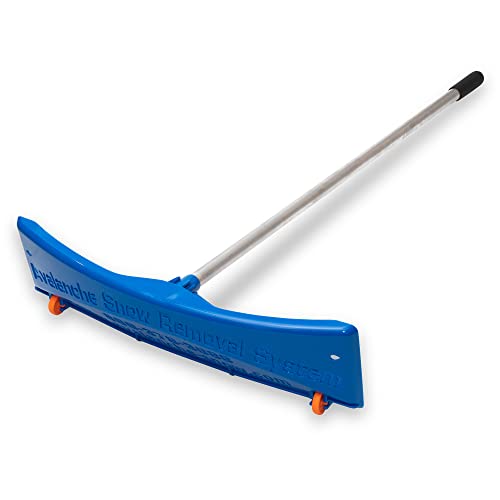
Avalanche! Snow Roof Rake Deluxe, Easy Snow Removal from Roof, Prevents Ice Dams…
The SnowRake! Deluxe 20 is a must-have tool for homeowners that helps prevent ice dams by keeping snow off the edges of your roof.
What we like
- 24 in. head clears a wide strip per pull
- Built-in 1.5 in. wheels keep the blade off shingles
- Maker-listed for shingle, shake, tile, metal and solar roofs
- Light, at about 5.8 lb
- Tool-free snap sections plus a wall bracket
Worth noting
- Pole flexes at full length
- No extension kit; tops out around 20 ft
- Aluminum pole conducts electricity
- Pulling heavy, wet snow is hard work
2. Snow Joe RJ204M 21 ft Twist-n-Lock Telescoping Roof Rake
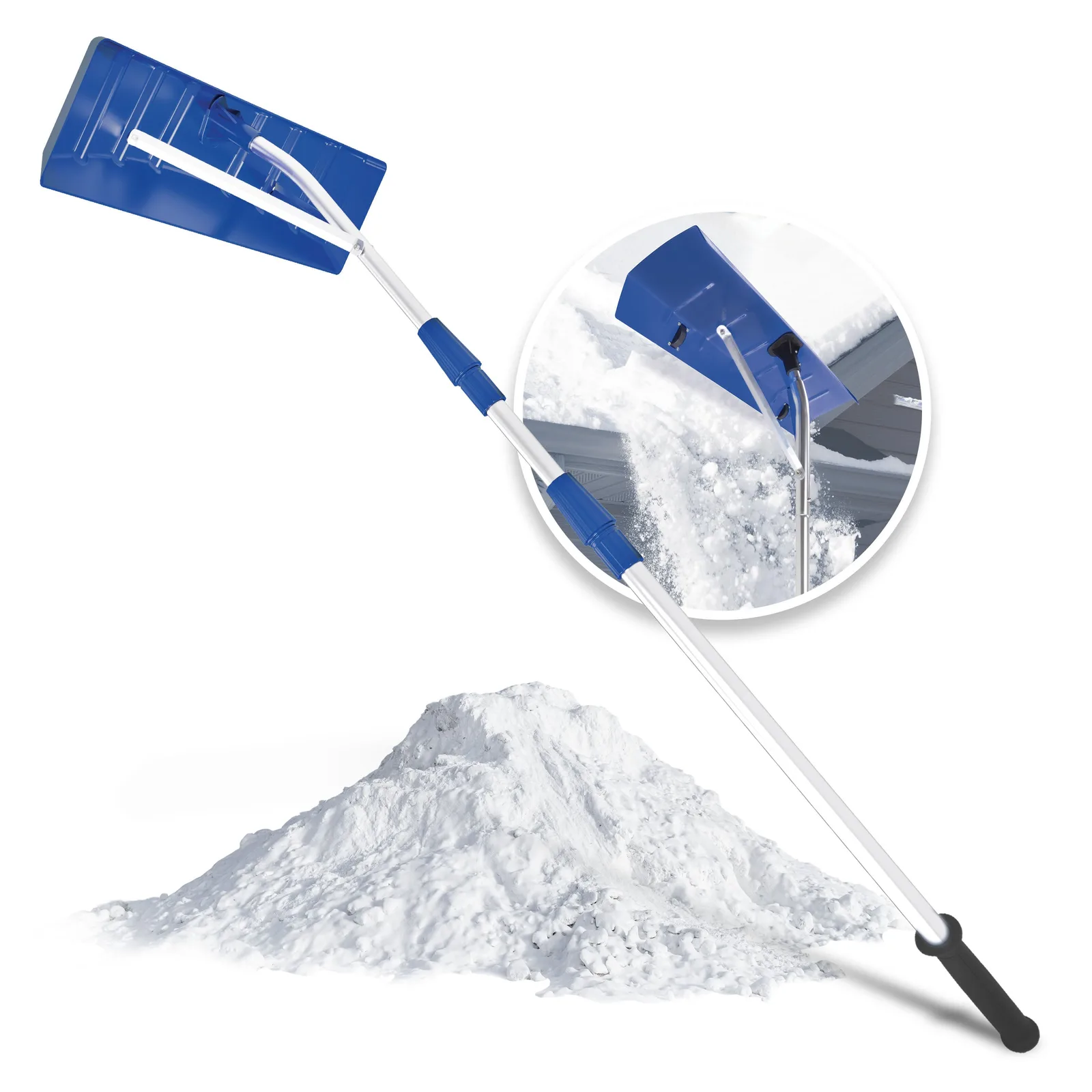
- Wide poly blade
- One-piece telescoping aluminum pole
- Works on snow and wet leaves
- 2-year warranty
This snow rake comes from Snow Joe, a manufacturer of many products related to clean up and the outdoors, like snowblowers and pressure washers. This snow removal tool features a telescoping aluminum pole that twist-locks anywhere from 6.2 to 21 ft. Snow Joe advertises 27 ft of total overhead reach, but that figure counts your own height and arm reach; the pole itself tops out at 21 ft.
Because the rake head is 6 in. x 25 in., it covers a large surface area with minimal effort. At 4.8 lb, it’s also one of the lighter rakes here, which makes it easier to hold overhead without strain. The head bolts on with a pair of braces when you first set it up (tools are included), and after that there’s nothing to snap together.
One convenient aspect of the Snow Joe rake is that it works on wet leaves as well as snow, meaning it can be helpful investment year round. The blue color makes the head of the rake easy to see so you always know where you’re reaching. The poly blade is yet another benefit: unlike a metal blade, the poly won’t rust.
The pole collapses to about 6 ft, making it a good tool for many one and two-story homes that don’t have much storage room.
The weak spot is the twist locks. Several owners report meltwater running down the pole and freezing in the locks, and a few have had a section seize. Wipe the pole dry and store it indoors after use, and keep the aluminum pole well clear of power lines.

Snow Joe Telescoping Roof Rake, Extendable Leaf & Snow Shovel with Poly Blade…
Versatile Rake: Perfect for removing snow, wet leaves, and debris from roofs without climbing, the roof rake ensures optimal utility
What we like
- Telescopes 6.2 to 21 ft with no sections to snap together
- Light at about 4.8 lb
- Wide 25 in. blade clears more per pull
- Collapses to about 6 ft for storage
- 2-year warranty
Worth noting
- Twist locks can ice up or seize in cold, wet use
- No wheels; the blade rides directly on shingles
- Aluminum pole conducts electricity
- Head braces can bend if dropped or overloaded
3. SnowPeeler Premium 30 ft Roof Rake
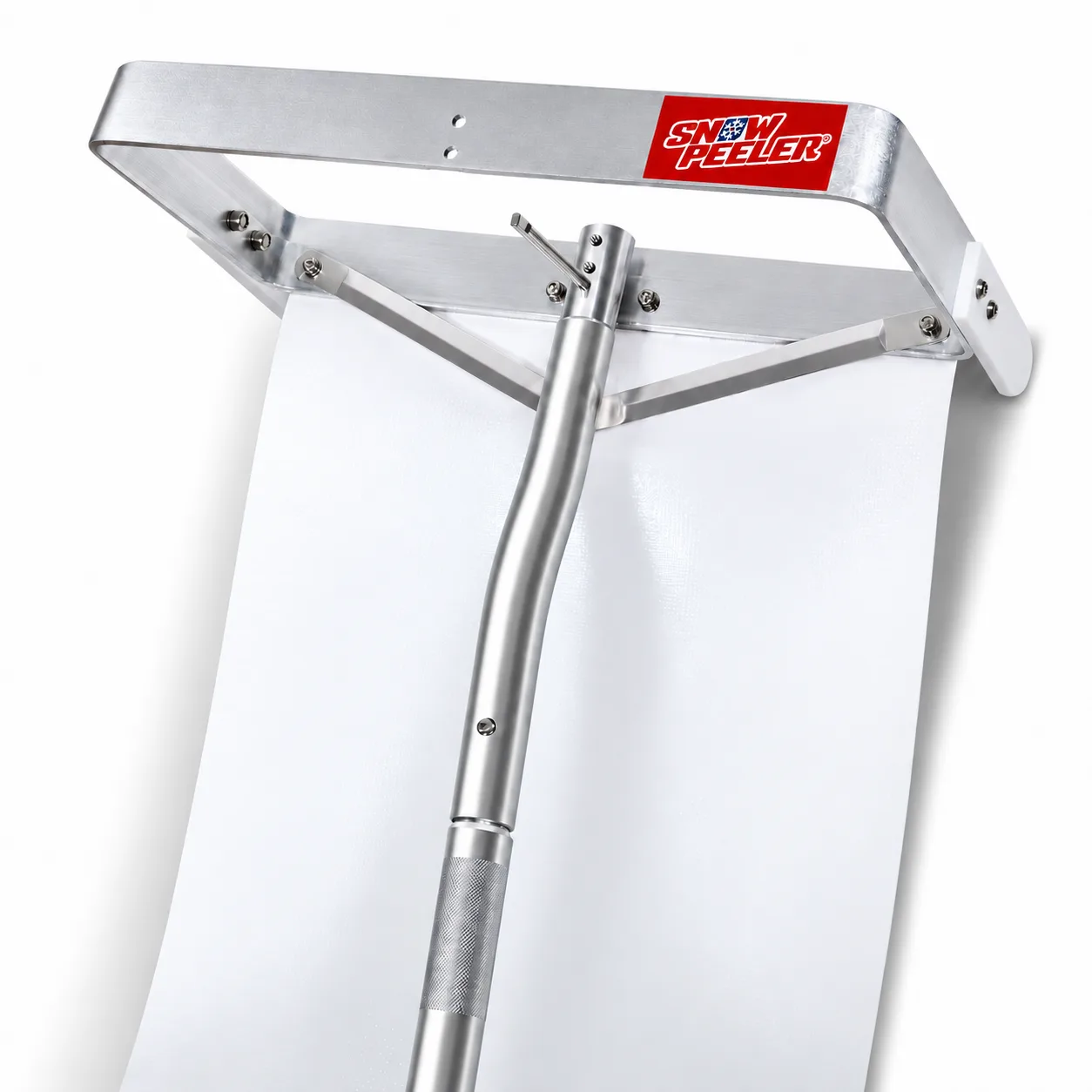
- Slide system with a sharp aluminum cutter
- 30 ft reach from six aluminum sections
- Made for larger homes and low-slope roofs
- 2-year limited warranty
If your eaves are too high for a 20 ft rake, the SnowPeeler Premium is the long-reach answer. Six 5 ft aluminum sections snap together for up to 30 ft of reach, and Family Handyman named it the best pro-grade snow rake in its roundup.
It’s a slide system rather than a pull rake. You push the sharp, tapered aluminum cutter up the roof on its plastic glide pads, and the snow it cuts rides a 10 ft fabric slide down to the ground. SnowPeeler aims it at larger homes, hard-to-reach areas and low-slope roofs, and owners say it chews through deep and packed snow quickly.
The trade-off is weight. At about 13.4 lb, it’s more than twice as heavy as our top pick, and owners say it gets tiring and hard to control at full length. Several report poles bending, and one had a big slab slide down the full handle and snap a joint. Assemble only as many sections as you need.
Mind the power lines, too. The handle is all aluminum, and SnowPeeler itself warns against using it near power lines or in the wind, and says it’s for removing snow, not chopping ice. Snow also comes off the end of the slide right near your feet, so stand to the side of the landing zone.
SNOWPEELER Premium 30 ft Roof Rake (Model 3003)
Slide-style roof snow remover with an 18 in. aluminum cutting frame on glide pads, a 10 ft fabric slide and six aluminum handle sections reaching 30 ft.
What we like
- 30 ft reach from six aluminum sections
- Sharp aluminum cutter handles deep, packed snow
- 10 ft slide carries snow off with no pulling
- Suited to low-slope and long roofs
- 2-year limited warranty
Worth noting
- Heavy at about 13.4 lb; tiring at full length
- Aluminum handle conducts electricity
- Handle joints can bend or snap under big slabs
- Snow comes down the slide right at your feet
4. Avalanche! 500 (AVA500) Roof Snow Removal System
- Slide system: snow rides a 12 ft slide off the roof
- Fiberglass handle in four snap-together sections
- Takes the AVA-HK extension kit
- Rated for asphalt shingle roofs
The Avalanche! 500 is the slide-style sibling of our top pick. You set its 17-inch cutter frame at the eave and push it up the roof on 1.5-inch wheels. The frame cuts a block of snow, which drops onto a 12 ft plastic slide and rides down past the gutter. Owners call it a lot quicker and easier than a pull rake, especially in deep, fresh snow.
It runs on a fiberglass handle of four 46.5-inch sections, for about 16 ft of reach. Fiberglass conducts far less than aluminum, but it still isn’t safe near power lines: it can conduct when wet or dirty, and the sections are joined with aluminum couplers. Keep the same 10 ft clearance you would with any rake. If you need more reach, the AVA-HK handle kit adds two 4 ft fiberglass sections, up to 8 ft more. (That kit fits the 500, 750 and 1000 models, not the SRD20.)
There are limits. MARSHALLTOWN rates the 500 for asphalt shingle roofs only, and owners say it struggles with crusty or icy snow. The light plastic slide can catch the wind, and a few owners report tears. Snow also arrives fast at the bottom of the slide; one owner warned it comes off like an avalanche, which seems fitting.
If you have tile, cedar shake, metal or solar panels, look at the AVA750, which has 3-inch wheels and a tear-resistant vinyl-coated slide. The AVA1000 combo pairs the slide system with an SRD20 head for both slide and pull modes, and it’s Bob Vila’s top pick. For another slide option, the Snow Joe RJ208M PRO is a sectional rake with a debris slide and rollers.
MARSHALLTOWN Avalanche! 500 (AVA500) Roof Snow Removal System
A slide-style roof snow remover: a 17-inch cutter frame on 1.5-inch wheels feeds snow onto a 12-foot plastic slide, on a four-section fiberglass handle with about 16 feet of reach.
What we like
- Snow slides off; no dragging every load
- 17 in. cutter with a 12 ft slide clears past the gutter
- Fiberglass handle is warmer to hold than aluminum
- AVA-HK kit adds up to 8 ft
- Replacement slide, wheels and frames sold
Worth noting
- Rated for asphalt shingles only
- Struggles with crusty or icy snow
- Plastic slide can tear and catches wind
- Heavy to push at full reach; snow lands near you
5. Garelick 89421 21 ft Aluminum Roof Rake
- 24 in. aluminum blade
- Shingle Saver rollers keep the blade off the roof
- Works on wet leaves and snow
- Made in USA
The Garelick is similar to the Avalanche! SRD20 in that it includes wheels on the head to stop the heavy aluminum from digging into the roof. Garelick calls them Shingle Saver rollers, and they’re designed so the blade never touches the roof’s surface.
The 24 in. aluminum blade is what sets it apart. A rigid metal blade cuts through wet, crusty or wind-packed snow better than poly, and the reviewers at Sensible Digs rate this style of rake as the best choice for metal and standing-seam roofs. The silver color is a bit harder to see from far away than the blue rake heads on our list.
The sectional aluminum pole gives you 21 ft of reach. Our earlier coverage said Garelick doesn’t sell extensions, but that’s not right: a 5 ft aluminum extension (89005) is sold for Garelick roof rakes. Note that the Garelick roof-rake line is now also sold under the USA Handy Tools name.

Garelick 89421 21-Foot Aluminum Snow Roof Rake With 24-Inch Blade
Patented shingle saver rollers make the rake easy to use
What we like
- Rigid aluminum blade cuts crusty or wet snow
- Shingle Saver rollers keep the blade edge off the roof
- 21 ft reach for most single-story eaves
- Well suited to metal and standing-seam roofs
- Made in USA
Worth noting
- Aluminum pole conducts electricity
- Handle flexes noticeably when fully assembled
- Rollers don't spin well on their aluminum axle
- Sectional assembly is slower than a telescoping pole
6. Garant GPRR24 Yukon 24-Inch Roof Rake
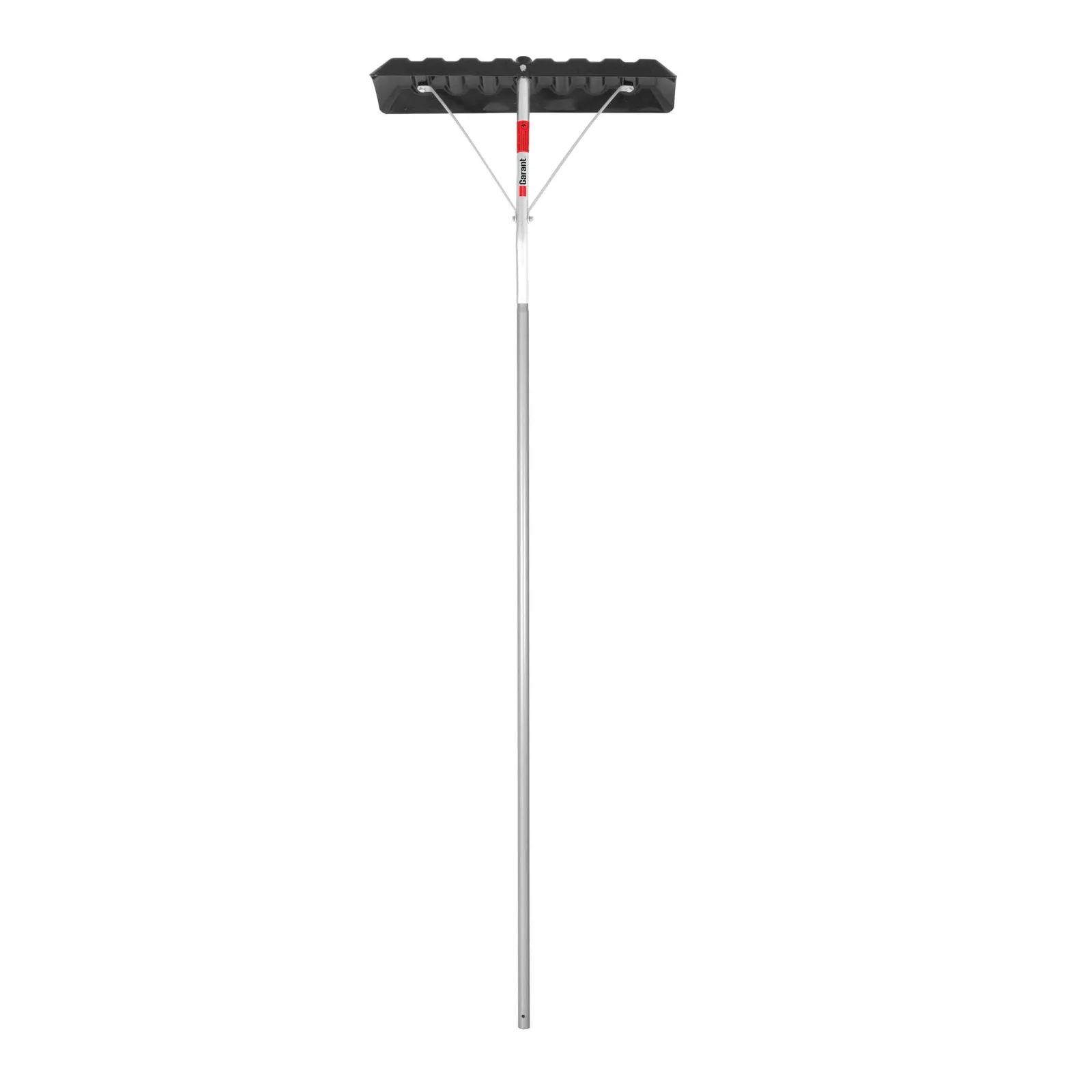
- Poly blade
- Anti-slip grip
- Works on snow and wet leaves
- Three-section aluminum pole
The Garant GPRR24 Yukon (despite having a complex name) is a simple roof rake with minimum frills. The aluminum pole comes with three separate sections, each 5 ft. long. You connect them together to get a 15 ft handle, which works well for single-story homes and people with flat roofs who need to be able to reach far back.
If you have a taller house, you’ll need to pick up an extension or two. Garant sells the GPRR24E, a 5 ft aluminum section made for this rake, and one extra section takes the handle to 20 ft.
This snow rake is lightweight and works on wet leaves as well as snow. It possesses an anti-slip grip so you don’t drop the rake when trying to scoop particularly heavy loads of snow off of the roof. The poly blade is meant to be gentle on shingles, and won’t rust since it’s not made of metal.

What we like
- Light and simple to carry and assemble
- Poly blade is gentle on shingles
- Wide 24 in. angled head
- Anti-slip grip
- 5 ft GPRR24E section adds reach
Worth noting
- 15 ft handle limits it to single-story eaves
- Handle wobbles with all three sections joined
- Struggles with heavy, wet snow
- Aluminum handle conducts electricity
Frequently Asked Questions
Does roof raking prevent ice dams?
It helps. Ice dams form when heat escaping into the attic melts roof snow and the water refreezes at the colder eave. Raking the bottom few feet of the roof (often cited as at least 3 to 4 ft) removes the snow that feeds the dam, but it treats the symptom. The lasting fix, according to the University of Minnesota Extension, is air sealing, insulation and ventilation.
How long a roof rake do I need?
Longer than your eave height, because you need to stand well back from the wall. A 20 to 21 ft pole covers the lower part of most single-story roofs and the bottom edge of many two-story roofs, while taller eaves need a 25 to 30 ft system like the SnowPeeler Premium (or a pro). Ground slope and roof pitch change the numbers, and you should stop a few feet short of full extension.
How much snow on a roof is too much?
Weight matters more than depth. The Maine Emergency Management Agency, citing IBHS estimates, says a typical roof can handle about 20 lb per square foot of extra weight, and older roofs may handle less. Here’s how common snow conditions add up, per the same source:
| Snow or ice | Roughly equals |
|---|---|
| 10 to 12 in. of new snow | About 5 lb per sq ft |
| 3 to 5 in. of old, packed snow | About 5 lb per sq ft |
| 1 in. of ice | About 1 ft of fresh snow |
| 2 ft of old snow plus 2 ft of new snow | Could be as much as 60 lb per sq ft |
By Maine’s math, a typical roof can carry up to about 4 ft of fresh snow, while more than 2 ft of old, packed snow could be too much. If you see sagging, hear creaking or cracking, or notice doors popping open, get out and have the building inspected.
Is it safe to use a roof rake near power lines?
No. Most roof rake poles are aluminum and conduct electricity, and even a fiberglass pole can conduct when it’s wet or dirty. OSHA requires workers to keep any conductive object at least 10 ft from overhead lines up to 50 kV; treat that as your minimum, and treat every line, including the service drop to your house, as live. If you can’t reach the snow while keeping the whole pole that far away, call your utility or a pro.
Can you use a roof rake on a metal roof?
Yes, with the right rake. Look for wheels or rollers that keep the blade off the panels; on standing-seam roofs, check that the wheels are big enough to clear the ribs. Avalanche! lists the SRD20 for metal roofs, and Sensible Digs recommends Garelick-style aluminum rakes with rollers for metal and standing-seam roofs. The AVA500 slide system is rated for asphalt shingles only.
Do roof rakes damage shingles?
They can, if you scrape down to bare shingles or force the blade. The University of Minnesota Extension notes that a roof rake may damage roofing materials, and Maine’s emergency management agency suggests leaving 2 to 3 inches of snow rather than scraping the roof clean. Light, steady pulls, a poly head and wheels or rollers all help.
Can I use a roof rake from a ladder or on the roof?
No. The whole point of a roof rake is that you stay on the ground. Maine’s emergency management agency warns against climbing ladders in winter, since ice and snow build up on the rungs and your boots, and says roof work may be too dangerous for anyone but a trained professional. If you can’t reach the snow from the ground, hire a pro.
Conclusion: The Best Roof Rake for Snow Removal
A roof rake is particularly beneficial to individuals who live in snowy or wintry areas because it can eliminate pressure on the roof and help keep ice dams from forming. Our overall choice is still the Avalanche! SRD20 for its light weight, wide head and use of wheels, and the Snow Joe RJ204M is a great second choice, especially for those who are looking for a telescoping handle.
For tall two-story eaves, the SnowPeeler Premium has the reach the others lack, and if you’d rather let the snow slide off than drag it, the Avalanche! 500 is the slide system to get. Whichever you choose, stay on the ground and keep the pole well away from power lines.
Regardless, any of these rakes will clean most roofs off, as long as you understand the limitations as explained in the reviews.
May you have no leaks or ice dams this season!
Previously recommended
- Ohuhu 21 Inch Twist-n-Lock: no longer available; we now recommend the Snow Joe RJ204M instead.