Best Teak Sealer and Teak Oil for Outdoor Furniture
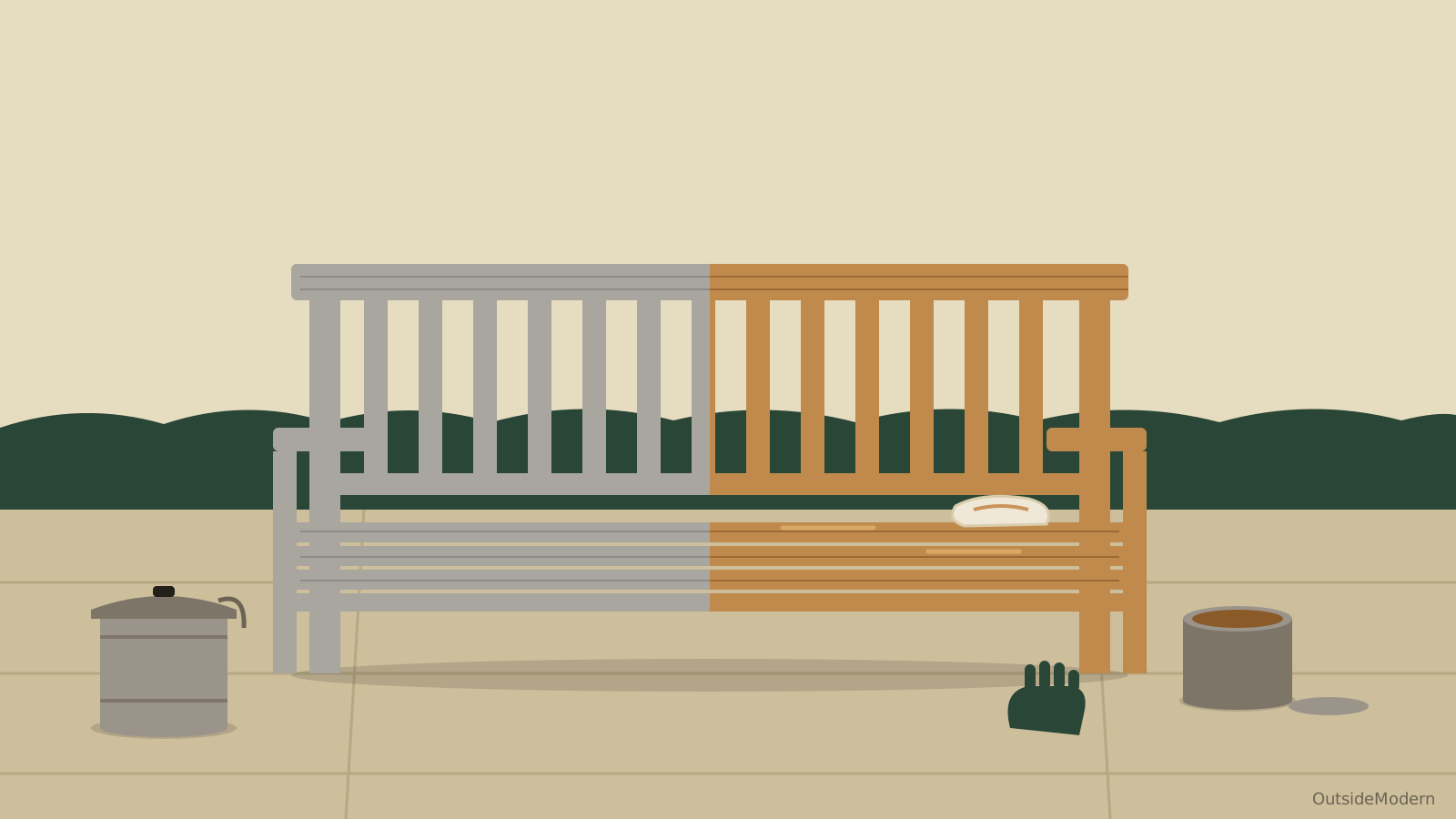
Teak is a favorite for outdoor furniture, and it asks for surprisingly little. Left alone, it weathers to silver. If you’d rather keep that warm honey color, you need a cleaner and a sealer or protector, and you need to read the labels, because some of these products are strong chemicals.
This guide compares three teak-care systems (Star brite, Golden Care and Semco) plus one teak oil, explains the difference between oiling and sealing, and walks through cleaning and sealing step by step. If you’re still choosing furniture, our outdoor furniture materials guide explains how teak compares with aluminum, steel and HDPE.
What’s changed in this update: we checked every product against its maker’s page and Safety Data Sheet (SDS), corrected the directions and sizes, added each label’s hazard warnings, and added a safety section on mixing cleaners and disposing of oily rags. Prices change, so we don’t list them.
Teak Sealers at a Glance
| Product | What it is | Key contents (per the maker’s SDS) | SDS signal word | Maker’s reapply guidance |
|---|---|---|---|---|
| Star brite Teak Sealer, Classic Teak (16 oz) | One-coat sealer, final step | Solvent (hydrocarbons) | Danger | None stated |
| Star brite Premium Teak Cleaner, Step 1 | Cleaner for gray or black teak | Lye and bleach | Danger | None stated |
| Star brite Premium Teak Brightener, Step 2 | Oxalic-acid brightener | Oxalic acid | Danger | None stated |
| Golden Care Teak & Hardwood Cleaner | One-step cleaner and color restorer | Citric acid (maker calls it water-based) | Not classified (UK SDS) | None stated |
| Golden Care Honey Brown Teak & Hardwood Protector | Tinted color protector | Water-based | Not classified (UK SDS) | About once a year |
| Golden Care Teak & Hardwood Shield | Clear water- and dirt-repellent top coat | Glycol-ether solvents (maker calls it water-based) | Not classified (UK SDS) | About once a year |
| Watco Teak Oil, Clear (1 quart) | Wipe-on oil finish | Linseed oil, resin and petroleum solvents | Danger | None stated |
Outdoor Teak Furniture Care
Teak doesn’t need a finish to last. The USDA Forest Products Laboratory rates old-growth teak heartwood very decay resistant, and young-growth teak only moderately resistant; sapwood of any species resists decay poorly. That’s one reason it’s worth asking a seller what you’re buying.
Untreated teak changes color. Westminster Teak says untreated teak weathers to “a handsome soft silvery patina within a year or so,” and that the change doesn’t compromise its structural integrity. So sealing is a choice about looks: keep the honey color with a sealer or protector, or let it go silver.
Dark or black patches are a different matter. Star brite markets its teak cleaner for “grey or black teak,” and Westminster Teak says its cleaner removes “mildew, mold and dirt.” For general mildew cleanup on other materials, see our guide on how to remove mildew from outdoor furniture.
Teak Sealer – What To Look For
Sealer, Protector or Oil
These products overlap more than the names suggest. Teak oils are drying oils plus resins and solvents; Watco’s SDS lists linseed oil, a rosin ester resin and petroleum solvents. “Sealers” and “protectors” range from solvent-based finishes (Star brite’s sealer is mostly hydrocarbon solvent, per its SDS) to water-based coatings (Golden Care’s protector is mostly water, per its SDS). Check the label, not the name.
Color
Some finishes tint the wood. Golden Care sells its protector in a range of tints, and its Shield is “invisible and transparent,” per the maker. Star brite’s SDS lists its sealer’s color as brown. Golden Care says to test on “a small, hidden area (such as the back or underside)” first, because the wrong color has to be sanded off.
Hazard Level
The products here run from Danger-labeled solvent finishes and corrosive cleaners to water-based products whose SDSs list no hazard classification. If you’d rather avoid strong chemicals, that’s a real difference. Either way, read the label first.
A Matched System
Makers design their cleaners, brighteners and sealers to work in order. Golden Care, for one, says its protector “should never be applied directly to oiled teak, as this can cause severe discolouration,” and that oiled teak has to be cleaned first. Sticking with one maker’s system keeps you on its directions.
Teak Oil vs. Teak Sealer
It’s natural to assume that a product called teak oil is the right thing for teak. Outdoors, it’s not that simple.
Teak oil is a drying-oil finish: Watco’s contains linseed oil plus resin and solvents, per its SDS. A teak sealer or protector forms a coating meant to hold the color. Rust-Oleum says Watco Teak Oil is for “outdoor or indoor furniture” and dense woods such as teak, so oil is a legitimate option. One retailer’s care guide (Patio Productions) advises using a teak sealer outdoors instead of teak oil, and the makers make competing claims: Star brite says its sealer “Outperforms any teak oil or sealer.”
What’s clear is that you shouldn’t layer them carelessly. Golden Care says not to put its protector over oiled teak without cleaning first. Oil finishes also bring a fire risk from used rags, covered below.
If you want the lowest-effort route, letting teak weather to silver is a perfectly good choice. Golden Care even sells its clear Shield for keeping “a natural patina grey look.”
Safety: Read the Label First
The Centers for Disease Control and Prevention says it is critical to read and follow the safety instructions on any product you use. Each product below lists the warnings from its own SDS, and those come first. A few rules apply across the board.
Never mix cleaners. Never mix bleach with ammonia or any other cleaner, says the CDC. Mixing chlorine bleach with an acid, including vinegar, gives off chlorine gas, according to the Washington State Department of Health. This matters with teak kits: Star brite’s Step 1 cleaner contains bleach and lye, and its Step 2 brightener is an acid. Rinse the cleaner off thoroughly with fresh water, as the label directs, before the brightener goes on, and never combine the two.
Ventilation and gloves. Work outdoors or with plenty of fresh air, and wear gloves and eye protection (CDC), plus whatever the label adds. Several labels here name a specific glove material.
Oily rags. Rags soaked in oil finishes can heat up as they dry and catch fire, warns the Seattle Fire Department. Dry them flat or hung outdoors, away from buildings, then store them in a metal can with a tight lid filled with water and detergent, and ask your town how to dispose of them. The National Park Service gives similar advice: spread rags in a single layer, out of direct sun. If a product’s label gives its own rag instruction, follow the label.
Teak Cleaning and Maintenance
For routine care, follow your furniture maker’s care guide. Westminster Teak, for one, suggests cleaning “no more than twice a year.” Cushions have their own care rules; our outdoor cushion buying guide covers cleaning and storing them.
Teak makers disagree on pressure washing, so follow your furniture maker’s care guide. Star brite says its cleaner works “without the need for sanding or pressure cleaning.”
Sanding
Sanding takes off stains and old finish. Rust-Oleum’s directions for unfinished wood are to sand with 150 to 220 grit sandpaper and remove the dust with a rag dampened with mineral spirits, or vacuum. Star brite says that if you sand, you must clean the surface before sealing, removing any loose wax or pitch.
How Often to Reseal
Only some makers give an interval. Golden Care says, “Generally, we recommend reapplying once a year,” and more often in strong sun, high humidity or heavy rain. Westminster Teak suggests its own protector at the beginning and end of the season. Star brite and Rust-Oleum state no interval on the pages we read, so follow your product’s label.
New Furniture
The makers differ here. Golden Care recommends letting new furniture weather outdoors first, until the wood loses some color, then cleaning and protecting it; it gives no time. Star brite says its sealer works on fresh new wood.
Between seasons, a fitted cover is worth considering; see our picks for patio sofa covers.
How to Clean and Seal Teak, Step by Step
Directions vary by product, so this is the general order the makers give. Use your product’s label for times and amounts.
- Clean. Apply the teak cleaner to dry wood, let it sit as long as the label says, scrub with the grain, and rinse thoroughly with fresh water.
- Brighten (if your system has this step). Apply the brightener, let it sit as directed, and rinse thoroughly. Never mix it with the cleaner.
- Let it dry. Golden Care says the surface must be “100% dry, smooth, and dust-free” before its protector.
- Seal or protect. Apply the sealer, protector or oil as the label directs, with the coats it specifies.
- Top coat (optional). Golden Care’s Shield goes over its protector after 24 hours, “never the other way around.”
- Handle the rags. Dry and store used rags as described in the safety section above.
The Best Teak Sealers: Product Reviews
We couldn’t confirm a major retailer or maker store selling these products at the time of this update, so we haven’t given awards, and the product boxes are paused until we confirm stock. The facts below come from each maker’s product page and Safety Data Sheet.
1. Star brite Teak Sealer System
Star brite’s system has three parts: a Step 1 cleaner, an optional Step 2 brightener, and the sealer. It’s marketed to boaters as well as patio owners, and its strongest selling point is the one-coat sealer. Its biggest drawback is that every part carries a Danger signal word on its SDS.
Star brite Premium Teak Cleaner, Step 1
Star brite’s Step 1 cleaner is for badly weathered, gray or black teak. Star brite’s directions are to apply it directly to dry wood, spread it with a stiff bristle brush or a scrub pad, leave it “approximately 1 to 2 minutes,” then scrub with the grain and rinse thoroughly with fresh water. Star brite says it won’t harm fiberglass or painted surfaces.
This is strong stuff. The label warns “Danger”: its SDS says it may be corrosive to metals, causes skin irritation, and causes serious eye damage. The SDS lists sodium hydroxide (lye) and sodium hypochlorite (bleach) and says to keep it away from acids. Use it only in a well-ventilated area, with neoprene gloves and safety glasses with side shields, as the SDS directs.
Because it contains bleach, never mix it with ammonia, acids or any other cleaner (CDC; Washington State Department of Health). Rinse it off thoroughly before the acid brightener.
Bottom line: a fast cleaner for neglected teak, best for anyone restoring gray wood who is comfortable handling a corrosive product. Skip it if you want something mild.
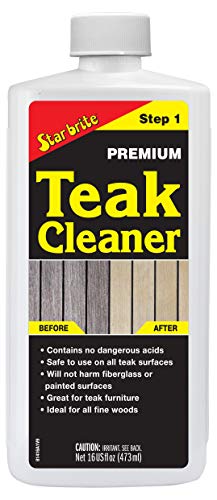
STAR BRITE Premium Teak Cleaner - Restore…
REVITALIZE YOUR TEAK - STAR BRITE Premium Teak Cleaner effortlessly restores the original charm of weathered and gray teak furniture or boat decks without the need for sanding or pressure cleaning
What we like
- Short 1-2 minute dwell, per the maker
- Maker says no sanding needed
- Maker says it won't harm fiberglass or painted surfaces
Worth noting
- SDS signal word Danger: causes serious eye damage
- Contains lye and bleach: never mix, keep away from acids
- Needs gloves and eye protection
Star brite Premium Teak Brightener, Step 2
The brightener evens out the color after cleaning. Star brite calls it the second step in restoring gray, weathered teak, and says it “requires no rubbing or scrubbing.” Its directions: apply with a sponge, cloth or brush along the grain, leave it 1 to 2 minutes, then rinse thoroughly with fresh water. Use it above 50°F and protect your hands with rubber gloves, the maker says.
The label warns “Danger”: its SDS says it causes skin irritation and serious eye damage. The SDS lists oxalic acid, calls for neoprene gloves and eye or face protection, and says to use it only in well-ventilated areas.
It’s an acid, and the Step 1 cleaner contains bleach. Rinse the cleaner off thoroughly before you apply the brightener, never mix the two, and never mix the brightener with any bleach product.
Bottom line: useful if your teak is very gray after cleaning; you may not need it on wood in good shape. The drawback is another Danger-labeled chemical to handle.

STAR BRITE Premium Teak Brightener - Step 2 - 16 OZ (081516)
RESTORE ORIGINAL GLORY - Revive teak with STAR BRITE Teak Brightener, an essential part of your restoration kit, transforming tired, dull and uneven wood tone
What we like
- Short 1-2 minute dwell
- No scrubbing, per the maker
- Evens out color after cleaning
Worth noting
- Oxalic-acid product; SDS signal word Danger (serious eye damage)
- Needs gloves and eye protection
- Use only above 50°F, per the maker
Star brite Teak Sealer, Classic Teak (16 oz)
The sealer is the final step. Star brite says it’s “Designed for teak wood on boats and outdoor furniture exposed to tropical sun and salt.” The size covered here is the 16 oz bottle (SKU 088016); the maker also sells larger sizes.
Star brite’s directions are simple: start with a clean surface, then “Apply one coat of STAR BRITE Teak Sealer evenly with a brush or cloth. Allow to dry thoroughly before use.” The maker gives no dry time or reseal interval on its page, so give it plenty of time. Its SDS lists the color as brown.
The label warns “Danger”: its SDS says it is a flammable liquid and vapor, may cause an allergic skin reaction, and is suspected of damaging the unborn child. Keep it away from heat, sparks and flames, use it only in well-ventilated areas, and wear gloves (the SDS names laminated film) and safety glasses with side shields. The SDS says to dispose of leftover product at an official chemical waste depot. Its SDS gives no rag instruction; as a precaution, handle used rags with the oily-rag steps above.
Bottom line: the maker’s one-coat directions make it simple to apply, and it suits owners who want a sealer from a familiar marine brand. The drawbacks are the solvent base and the Danger-level warnings.

STAR BRITE Teak Sealer - No Drip, No Splash Formula - One-Coat…
LONG-LASTING PROTECTION - Outperforms any teak oil or sealer, even under harsh tropical sun and salt conditions; a reliable choice for all your fine woods
What we like
- One coat, per the maker
- No-drip gel formula, per the maker
- Sold from 16 oz to gallon sizes
- Part of a matched cleaner, brightener and sealer system
Worth noting
- Solvent-based; SDS signal word Danger (flammable, skin sensitizer, reproductive hazard)
- Maker gives no dry time or reseal interval
- SDS lists its color as brown
2. Golden Care Teak System
Golden Care’s system has a cleaner, a tinted protector and a clear shield, all water-based according to the maker. Golden Care’s safety data sheets list each one as not classified (UK versions), which makes this the lower-hazard system on paper. The drawback is availability: in the US we found it only through teak furniture dealers.
Golden Care Teak & Hardwood Cleaner
Golden Care says its cleaner “Removes dirt, brightens and restores discoloured wood,” so it handles cleaning and brightening in one step. The maker says to use it with its green scrubbing pad and let the wood dry completely afterward.
Golden Care’s safety data sheet lists it as not classified, but it does list citric acid, an acid. Its SDS says to use it “only outdoors or in a well-ventilated area” and calls for protective gloves, and Golden Care’s FAQ advises gloves and eye protection. Because it contains an acid, never mix it with bleach products (Washington State Department of Health).
Bottom line: a one-step cleaner for owners who want to skip the harsh chemistry. You’ll need its scrubbing pad, and finding it in the US takes some looking.

Golden Care Teak Cleaner
CLEAN & BRIGHTEN IN ONE STEP — Golden Care Teak Cleaner combines a high-concentration cleaner and brightener in a single formula
What we like
- Cleans and brightens in one step, per the maker
- SDS (UK) lists no hazard classification
- Maker says it cleans off old oil before its protector
Worth noting
- Hard to find in the US outside teak dealers
- Contains citric acid: never mix with bleach cleaners
- Needs the maker's scrubbing pad
Golden Care Honey Brown Teak & Hardwood Protector
The protector puts the color back. Golden Care calls it an “Easy to apply, water-based protector that maintains the honey brown original wood colour,” and sells it in other tints too. Test it on a hidden spot first; the maker says the wrong color has to be sanded off.
Golden Care says to allow 24 hours before using the furniture or applying other Golden Care products, and to reapply about once a year, more often in harsh conditions. Never put it straight onto oiled teak; the maker says that can cause severe discoloration, so clean oiled teak first.
Golden Care’s safety data sheet lists it as not classified. Its SDS says to use it only outdoors or in a well-ventilated area and calls for protective gloves, and the maker advises gloves and eye protection.
Bottom line: a good fit for anyone who wants a water-based product and a clear reapply guideline. The drawbacks: it can’t go over oiled teak, and US stock is through dealers.
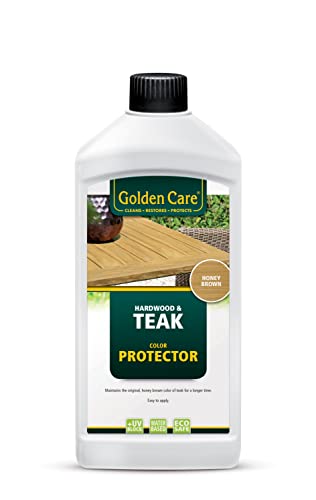
Golden Care Teak and Hardwood Honey Brown Protector
RESTORE AND PRESERVE THAT HONEY-BROWN COLOR — Honey Brown Protector is specially formulated to maintain the rich, natural color of teak, keeping your furniture looking as beautiful as the day you bought it.
What we like
- Water-based, per the maker
- SDS (UK) lists no hazard classification
- Sold in a range of tints
- Maker gives a once-a-year reapply guideline
Worth noting
- Must not go on oiled teak without cleaning first
- Wrong tint has to be sanded off
- Hard to find in the US outside teak dealers
Golden Care Teak & Hardwood Shield
The Shield is a clear top coat. Golden Care says it “Makes water- and dirt-repellent” and “Helps to prevent stains keeping a natural patina grey look.” Use it over the protector after 24 hours, “never the other way around,” or on its own over gray teak if you like the silver look.
Golden Care’s safety data sheet lists it as not classified. The maker advises gloves and eye protection; work outdoors or with good ventilation.
Bottom line: worth adding on dining tables and other pieces that see spills, or on its own if you’re keeping teak gray. It’s one more product and one more 24-hour wait.
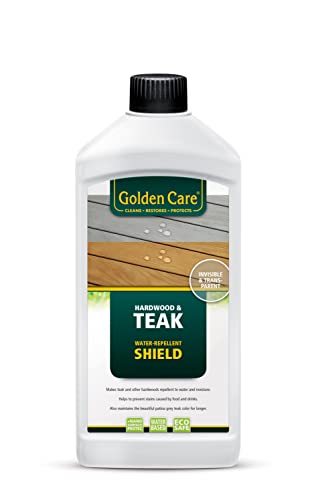
What we like
- Clear; keeps the gray look or goes over the protector, per the maker
- Water- and dirt-repellent, per the maker
- SDS (UK) lists no hazard classification
Worth noting
- Goes only over the protector, never under it
- 24-hour wait after the protector
- Hard to find in the US outside teak dealers
3. Watco Teak Oil
If you prefer an oil finish, Rust-Oleum’s Watco Teak Oil (clear, 1 quart, SKU 67141) is made for “outdoor or indoor furniture and marine surfaces” and dense woods such as teak, per the maker. Rust-Oleum calls it an “Outstanding UV and moisture resistant finish” that “will not chip, peel or wear away.”
Rust-Oleum’s directions: apply only when air and surface are between 55°F and 90°F, flood it on, wipe off the excess thoroughly with a clean lint-free cloth, and allow 8 to 10 hours before light use. Follow the label for recoat timing. The maker rates coverage at 150 to 200 square feet per quart, and gives no reapply interval.
The label warns “Danger.” Its SDS says it is flammable, may cause an allergic skin reaction, causes serious eye irritation, may cause genetic defects, may cause cancer, may damage fertility or the unborn child, and causes damage to organs through prolonged or repeated exposure. The SDS calls for adequate ventilation (opening doors and windows for cross-ventilation indoors), nitrile or neoprene gloves, and splash-rated safety eyewear.
It contains linseed oil, so rags are a fire risk. Rags soaked in oil finishes can heat up as they dry and catch fire (Seattle Fire Department). Dry them flat or hung outdoors, away from buildings, then store them in a metal can with a tight lid filled with water and detergent, and ask your town how to dispose of them (Seattle Fire Department; National Park Service).
Bottom line: a reasonable pick for owners who prefer a wipe-on oil. It has the most serious hazard warnings on this page, and you’ll need to be careful with the rags.

Watco Teak Oil Wood Finish, Quart, Clear
Provides interior or exterior one-step protection for dense woods such as teak, rosewood and mahogany
What we like
- Maker says it's for outdoor or indoor furniture and dense woods like teak
- Wipe on, wipe off
- 150-200 sq ft per quart, per the maker
- Maker says it won't chip or peel
Worth noting
- SDS signal word Danger: flammable; cancer, genetic-defect and fertility hazards
- Oil-soaked rags can self-heat and ignite
- Needs ventilation, gloves and eye protection
- Maker gives no reapply interval
4. Semco Teak Sealer and Two-Part Cleaner
Semco has long been a name in teak care, and marine dealers still carry its sealer in several tints, including clear. We couldn’t find a working Semco maker site at the time of this update, so we have no product box or link for it.
Semco’s own US Safety Data Sheet (dated 2016) shows the sealer is a solvent-based product, mostly mineral spirits, despite descriptions you may see of it as water-based. That SDS says to wear gloves, provide ventilation and work outdoors when possible; Semco’s newer European SDS uses the signal word Danger and warns it may be fatal if swallowed and enters airways.
Semco’s two-part cleaner pairs a lye-based Part 1 with a phosphoric-acid Part 2. Semco’s Safety Data Sheet uses the signal word Danger and warns it causes severe skin burns and eye damage; it calls for gloves, protective clothing and eye or face protection. Never mix the two parts or any other cleaner; follow the label’s order and rinsing steps.
Frequently Asked Questions
Is it better to oil or seal outdoor teak?
Both are options. Rust-Oleum sells Watco Teak Oil for outdoor furniture, while one retailer’s care guide (Patio Productions) recommends a sealer outdoors instead. Oils carry a rag fire risk, and Golden Care says not to put its protector over oiled teak. Pick one approach and follow that maker’s directions.
How often should you seal teak outdoor furniture?
Golden Care recommends reapplying about once a year, more often in strong sun, high humidity or heavy rain. Westminster Teak suggests its protector at the start and end of the season. Star brite and Rust-Oleum give no interval, so follow your product’s label.
Can you leave teak furniture untreated outside?
Yes. Westminster Teak says untreated teak weathers to a soft silvery patina within a year or so, without compromising its structural integrity. Sealing is mainly about keeping the honey color.
What’s the difference between a teak cleaner and a teak brightener?
In Star brite’s system, the Step 1 cleaner lifts dirt and graying, and its SDS lists lye and bleach. The Step 2 brightener is an oxalic-acid product that evens out the color. Rinse the cleaner off thoroughly before the brightener, and never mix them. Golden Care’s cleaner does both jobs in one step, per the maker.
How do you safely dispose of teak oil rags?
Rags soaked in oil finishes can heat up as they dry and catch fire, according to the Seattle Fire Department. Dry them flat or hung outdoors, away from buildings, then keep them in a metal can with a tight lid filled with water and detergent. Ask your town how to dispose of them, and follow any rag instruction on the product’s label.
Our Recommendation
For a one-coat sealer from a matched system, the Star brite cleaner, brightener and sealer are simple to follow, as long as you’re comfortable with Danger-labeled chemicals and the never-mix rule. If you’d rather work with water-based products, Golden Care’s cleaner, protector and shield are the lower-hazard choice on their safety data sheets, if you can find them. And if you like the silver look, you can skip the finish entirely.
Shopping for the furniture itself? See our picks for: