Jora JK270 Review: The Insulated Dual-Chamber Tumbler
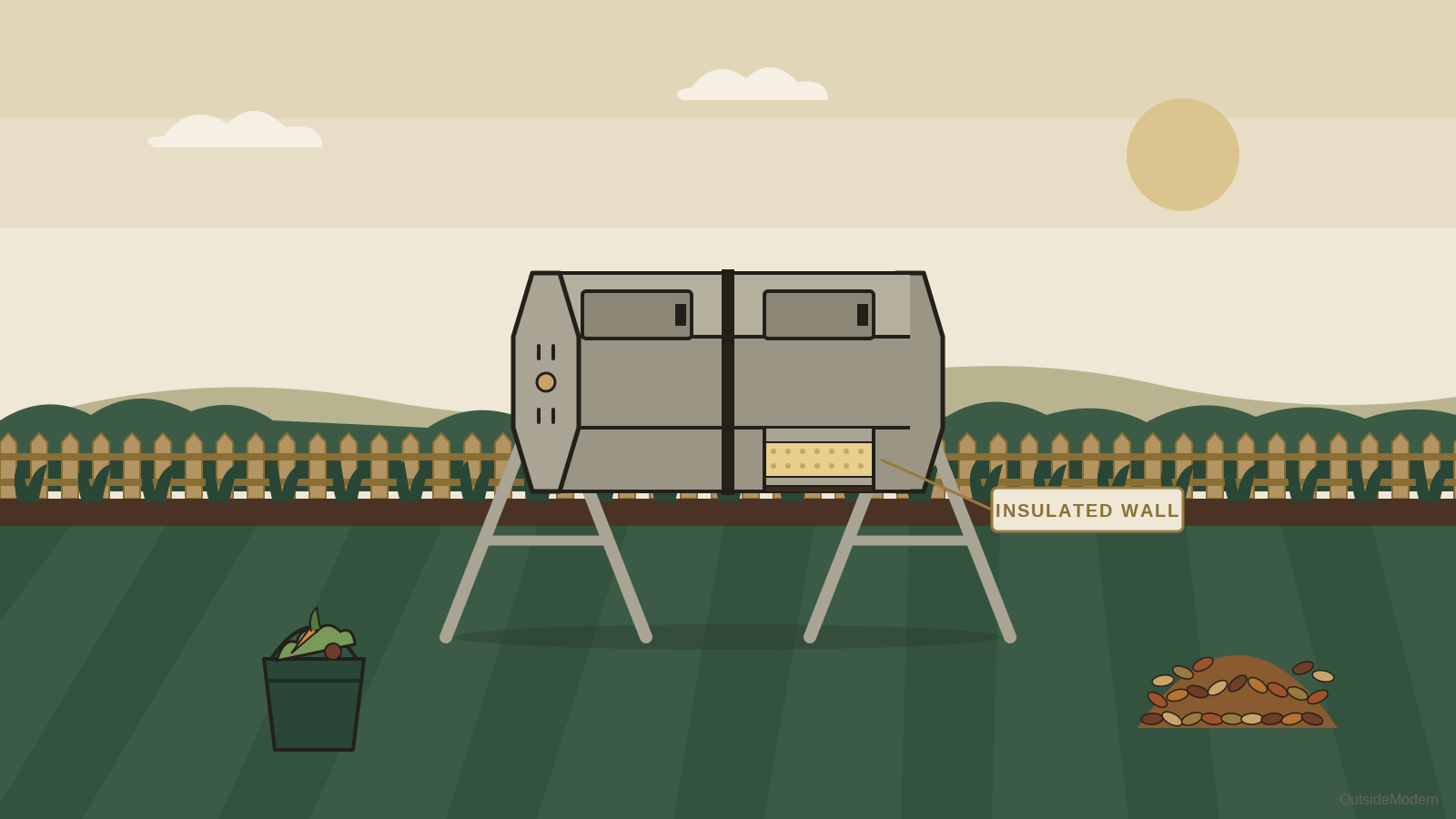
If you seek fresh, homegrown organic vegetables, you’ll want to start with high-quality compost. For many with smaller yards and minimal space, a raised compost tumbler like the Jora Composter JK270 is an efficient way to make compost for the garden.
The Jora JK270 dual-chamber compost tumbler is a drum Jora rates at 70 gallons, built of powder-coated galvanized steel panels lined with foam insulation, split into two chambers and turned by hand. It’s still sold in the US, sometimes listed as the JK270A, and in Europe it goes by Joraform JK270 or “Big Pig”. It’s the middle of Jora’s three sizes, between the JK125 and the JK400.
Built with heat in mind, the insulation is the selling point. Jora says the drum can “reach above 160°F internally.” For context, Cornell’s compost fact sheet says decomposition is fastest between 90°F and 140°F, and that above 160°F a pile “can sterilize itself”, killing off the microbes doing the work. So hot is good, but hotter isn’t always better.
The significant downsides of the Jora are a lengthy assembly, its weight and some owner reports of rust. If you’re comfortable with a wrench set and a two-person build, the Jora is an excellent choice!
In this article, we take a close look at the Jora JK270: what it does well, where it falls short, and how it compares with its smaller and larger siblings.
Jora Composter JK270 Product Review
The Jora JK270 has a lot to offer gardeners working on a smaller scale. It’s well made and thoughtfully designed with the end user in mind. It’s also a heavy steel tumbler with a long build, so if you’d rather have something lighter or simpler, check out our roundup of the best compost tumblers around, or our compost tumbler buying checklist.
How It Works
A central axle carries the drum, and Jora says the weight of the compost helps it “effortlessly turn the tumbler by hand.” There’s no crank. Jora’s FAQ says to give it a turn each time you add waste.
How often to turn matters more than any feature. Oregon State Extension says to “rotate the tumbler daily or, at a minimum, several times per week.” Arkansas Extension says a tumbler can produce usable compost “in as little as two to three weeks”, but only for a fully loaded batch turned daily, and it advises: “Do not add wastes as they become available.” Jora itself makes no compost-in-so-many-weeks claim.
Dual-Chamber Design
Two chambers allow for flexibility. Batch composting (loading everything at once) is the fast route, while adding material over time is easier to live with. With two chambers you can do both: fill one side as scraps come in while the other side finishes. For more on how two-bin tumblers work, see our dual-batch compost tumbler guide.
Insulated Compost Tumbler
The Jora JK270 is one of the few insulated compost tumblers on the market. Jora describes “high-density insulation that traps heat.” The insulated side panels help hold heat as winter rolls around, which most single-wall plastic and metal drums can’t do.
Raised and Latched
Jora calls the JK270 “Pest & rodent proof.” It sits off the ground on a steel stand with tight-fitting latches, and Jora includes a padlock ring. In our words, it’s rodent-resistant: a raised, latched steel body keeps rodents and ground pests out far better than an open pile. Great for small critters, probably not so much against bears.
Insects are another story. Oregon State Extension says raised tumblers are “animal-proof” but not insect-proof, and a few owners report fruit flies and small bugs getting in through the vents.
Warranty
Jora says, “Your full one-year warranty registration is automatic on purchase.” Its warranty page doesn’t spell out what’s covered, what’s excluded or how to make a claim; it says to call Jora or use the contact form on its site. Ask Jora what’s covered before you buy.
A dual-chamber composter offers a few significant benefits without much downside. It keeps kitchen and garden waste out of the trash, and it gives you nutrient-rich compost for the garden.
Aesthetics
The Jora offers a simple, sleek design that’s all it needs and nothing more. The plain stand and galvanized steel panels give the unit a professional look that doesn’t detract from any setting.
Functionality
The JK270 is efficient if you’re the right kind of person for it. It doesn’t take up a ton of space, and Jora rates it at 70 gallons and 6 to 8 gallons of waste a week. Jora pitches it at larger families, B&Bs and kindergartens.
Each chamber has a separate door, so you can get at either one at any time. That’s ideal for a few reasons.
By staggering the start times of each chamber, you can run two batches of compost at once: one that is in the process of being cooked, and one being built up for when the first one is done. Stop adding to a chamber once it’s full and let it work. Oregon State’s tumbler expert finds add-as-you-go tumbling “a very slow process”.
Users cycle back and forth between the two chambers and end up producing more frequent, but smaller, batches of compost. Let each batch cure before it goes on the garden: EPA says at least four weeks after it stops heating, Oregon State four to six weeks, and NC State six to twelve. The resting chamber or a simple bin works for that.
Time of Year and Temperature
Jora claims year-round composting and says the tumbler keeps working “even through harsh Nordic winters with 6 months of sub-zero temperatures.” Owners are more mixed. One long-term owner keeps theirs in an unheated garage. A New York City blogger whose smaller Jora froze in a record-cold winter quoted a Wyoming reviewer who described winter contents as “two large lumps of icy garbage.” The insulation buys you time in the cold, but a long, hard freeze can still stop it. See our winter composting tips for more.
Winter contents also tend to run wet. An Australian owner found that adding dry material and leaving the vents open sorted it out.
By keeping it in the sun as much as possible in winter, you’ll get the most out of it. Otherwise, look forward to a great kickstart once warmer temperatures come around. Don’t force a frozen drum to turn; wait for a thaw.
That said, you may want to move it to a shadier spot during hotter months to keep it from overheating.
Best Practices for Use
Consider the balance of greens and browns. Greens are nitrogen-rich (fruit and vegetable scraps, grass clippings, coffee grounds) and browns are carbon-rich (dry leaves, shredded non-glossy paper and cardboard, straw). EPA suggests about 2 to 3 parts browns to 1 part greens by volume, and NC State uses 2 to 1. Keep it about as damp as a wrung-out sponge, per EPA. Some owners say they needed more carbon, or a handful of wood pellets, than they expected.
Leave out meat, fish, dairy and oils, pet waste, and diseased plants or seeded weeds. A sealed drum doesn’t change that: EPA says backyard piles “generally do not reach high enough temperatures” to handle animal products.
Another important question is whether this composter can be used indoors. Jora says plainly that “the Jora is not watertight,” and Oregon State says tumblers “will leak dark liquid,” especially with lots of food or grass. Drain kitchen scraps before you add them, and start a batch with dry leaves or straw to soak up liquid. Jora says to set the finished unit “on concrete, slabs, or planks — never soft ground.” A well-balanced load leads to less smell and dripping, and some owners do run one in a garage, but plan for drips.
See our guide to using a tumbling composter for more information.
Assembly
The hardest part of owning the Jora JK270 is putting it together. Jora estimates 40 to 70 minutes, and its assembly instructions say, “We highly recommend 2 people.” You’ll need two 1/2-inch (13 mm) wrenches or sockets, one 9/16-inch (14 mm), and a #2 Phillips screwdriver.
Owners often take longer. One reviewer who isn’t a confident DIYer spent two to three hours and found the instructions hard to follow, and some owners report cross-threaded bolts. Jora posts assembly instructions and videos on its website, and they’re worth a look before you start. Once it’s built, things get much easier!
At about 86 lb empty, per Jora, moving it is a two-person job. When it’s full, it’s considerably heavier, so pick its spot before you build it.
Durability
The Jora is made of powder-coated galvanized steel, and some units last a long time: one owner reports a fully working tumbler after eight years, with peak temperatures around 155°F.
Rust is the main complaint, though. On an Australian review site, about half of 17 owners of the Joraform “Big Pig” report rust through panels, hinges or clips, often within two to three years. A couple report insulation panels shrinking, and our 2017 review noted owners whose insulation around the door openings failed after years of use. A European dealer, Quickcrop, wrote in 2020 that it doesn’t have a guarantee on the steel panels and that the catch magnets can rust; that may not reflect the US warranty, but it’s worth asking Jora about.
Our 2017 review also noted a handful of reports of damaged parts on delivery. If this happens to you, contact your seller right away for replacement components.
Useful Accessories
A Reotemp compost thermometer helps you check whether a batch is heating into Cornell’s 90°F to 140°F sweet spot or running too hot.
You may also see Jobe’s Organics Compost Starter recommended to get things rolling. It’s optional: Iowa State Extension says it’s “not necessary to add an inoculant or activator,” and a shovelful of finished compost or garden soil plus enough greens does the job.
Jora JK125 and JK400: The Siblings
Jora makes the same insulated, dual-chamber steel design in three sizes. Here’s how Jora rates them:
| Model | Volume (Jora) | Waste per week (Jora) | Weight (Jora) | Jora says it’s for |
|---|---|---|---|---|
| JK125 | 33 gal (4.5 cu ft) | 2 to 4 gal | About 64 lb | Smaller households (1 to 4 people) |
| JK270 | 70 gal (9.5 cu ft) | 6 to 8 gal | About 86 lb | Larger families, B&Bs, kindergartens |
| JK400 | Jora’s figures disagree | 13 to 21 gal | About 161 lb | Restaurants, schools, large quantities |
The Jora JK125 is the one to look at if you live alone or as a couple and want the same insulated build in a smaller footprint. Keep expectations in check for winter, though: Oregon State Extension says small two-chamber tumblers are “too small to be self-insulating” unless double-walled, and one owner’s insulated JK125 still froze in a record-cold winter.
The JK400 is for restaurants and schools. Its 13 to 21 gallons a week is the figure our original review mistakenly gave for the JK270. Jora gives two different volumes for the JK400, so we don’t print one. If you need that much capacity at home, a bin or pile is usually the better fit.
Who Should Skip It
- Anyone who wants a light, quick-to-build tumbler. At about 86 lb, per Jora, with a build that can take hours, the Jora isn’t it. Our hub guide has lighter plastic tumblers.
- Coastal or very wet climates. Given the rust reports, a plastic tumbler may outlast it.
- Anyone who wants a crank or a horizontal drum. See the types of rotating compost bins.
- Large yards and big gardens. Seventy gallons fills fast with fall leaves. Compare compost bins and tumblers or browse our compost bin designs.
Frequently Asked Questions
Is the Jora JK270 worth it?
If you want an insulated, enclosed tumbler that keeps working further into the cold, yes. It’s one of the few insulated tumblers sold, with two chambers and a sturdy steel body. Weigh that against its weight, a long build and owner reports of rust.
Does the Jora composter work in winter?
It holds heat better than an uninsulated drum. Jora says it works through long Nordic winters thanks to its insulation, but owners in hard-freeze climates report contents freezing solid, then restarting after a thaw. Add extra browns, since winter contents run wet, and keep it in the sun or an unheated garage if you can.
How much can the Jora JK270 hold?
Jora gives 70 gallons (9.5 cubic feet) across two chambers and rates it for 6 to 8 gallons of waste a week. Our original review gave 13 to 21 gallons a week, but that’s Jora’s figure for the bigger JK400.
What’s the difference between the Jora JK125 and JK270?
Size. Jora rates the JK125 at 33 gallons and 2 to 4 gallons of waste a week, for one to four people, and about 64 lb. The JK270 holds 70 gallons, takes 6 to 8 gallons a week and weighs about 86 lb. Both use the same insulated, two-chamber steel design.
Is the Jora composter rodent-proof?
Jora calls it “Pest & rodent proof”: it’s raised on a stand, with latching doors and a padlock ring. We’d call it rodent-resistant, and it keeps rodents out far better than an open pile. Insects can still get in through the vents, and Oregon State Extension notes raised tumblers aren’t insect-proof.
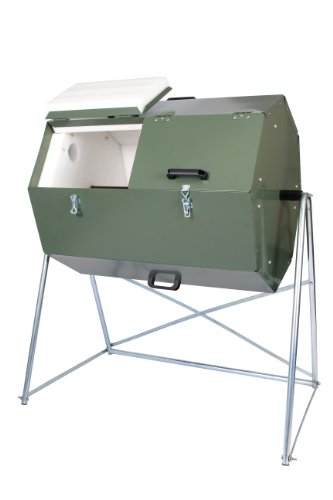
Jora Composter JK 270 - Outdoor Dual Chamber Compost Tumbler - 70 Gallon - Galvanized…
Save Time and Effort - The Jora Composter is thoughtfully designed for ease of use and simplicity of rotation. Acting as a compost turner, it can be effortlessly turned by hand whenever waste is added. With dual chambers, while one side is being filled, the other matures, providing a continuous composting process.
What we like
- Foam-insulated steel holds heat better than uninsulated drums
- Two chambers: fill one while the other finishes
- Raised, latching steel body resists rodents (Jora calls it rodent proof)
- 70 gallons; Jora rates it for 6 to 8 gallons of waste a week
- Turns by hand on a central axle
Worth noting
- Heavy: about 86 lb empty, per Jora
- Assembly takes from about an hour (Jora) to several hours (owners)
- Some owners report rust within a few years
- Not watertight: it drips, and can still freeze in a long hard freeze